
B.C. Allocates $3.3 Million for Sumas Prairie Flood Preparedness Planning
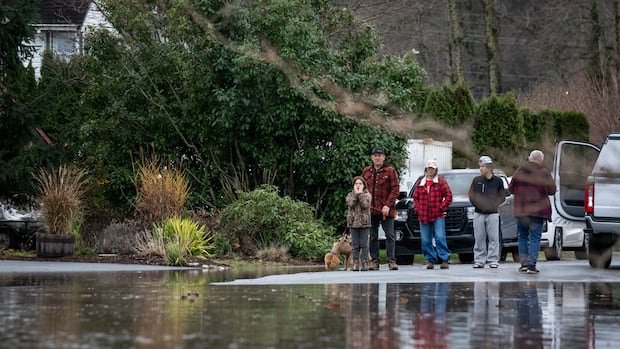
The British Columbia provincial government has allocated $3.3 million for flood resilience initiatives in Sumas Prairie, Abbotsford, following the area’s second significant flooding event in four years. This funding aims to bolster the Sumas River Watershed Flood Mitigation Initiative, targeting critical infrastructural and restorative projects in local farmland significantly impacted by recent deluges.
Among the proposed projects under this initiative are enhancements to water pumping capacities, road reconstruction, and the establishment of temporary flood storage solutions. Additionally, the agenda includes building fish-friendly infrastructure and dike systems, all essential in mitigating flood risks efficiently, stated Kelly Greene, the province’s minister of emergency management and climate readiness. However, Greene acknowledged the complex dynamics of flood risk management, emphasizing that improvements in one region could inadvertently escalate risk in another.
While local leaders, including Mayor Ross Siemens, have underscored the importance of this funding, they remain cautious. Siemens articulated that the provided sum is merely a step towards a more extensive solution, which will necessitate substantial commitments from senior governmental levels. This sentiment is echoed by Alex Mitchell, CEO of the Abbotsford Chamber of Commerce, who stressed that the overall funding required to shield the area from future disasters hovers around an alarming $1.8 billion.
The December floods in the Fraser Valley have already inflicted approximately $74 million in insured damages, as reported by the Insurance Bureau of Canada. The escalation of financial impacts calls for urgent and effective infrastructure strategies, highlighting the necessity for a holistic approach to flood management.
Moreover, ecological considerations are critical. Chief Dalton Silver of the Semá:th First Nation emphasized the importance of integrating environmental factors, such as fisheries and wildlife habitats, into the planning process. This focus on ecosystem preservation aligns with broader industry trends towards sustainable construction practices, advocating for a balanced coexistence between development and nature.
On a national scale, the federal government has pledged to support local infrastructure upgrades through a new $6 billion fund, expected to commence in the 2026-2027 fiscal year. Greene is set to advocate for federal involvement in flood mitigation planning during her upcoming meetings in Ottawa, seeking collaborative frameworks that address both immediate and long-term infrastructure needs.
Overall, while the provincial commitment shows progress in flood resilience, the reliance on broader governmental support and comprehensive funding reflects the complexities of constructing effective mitigation solutions in the evolving landscape of climate impact and infrastructure development.
📋 Article Summary
- The B.C. Government is allocating $3.3 million for flood resiliency projects in Abbotsford’s Sumas Prairie, addressing the region’s second major flood in four years.
- Planned improvements include increasing water pumping capacity, road reconstruction, temporary flood storage, and dike building, emphasizing ecological considerations as highlighted by local First Nations leaders.
- Mayor Ross Siemens noted that this funding is a vital step but requires larger commitments for comprehensive flood mitigation, estimated at $1.8 billion.
- The federal government is urged to join efforts in flood mitigation planning, with a $6 billion fund announced for local infrastructure upgrades starting in fiscal 2026-2027.
🏗️ Impact for Construction Professionals
The B.C. Government’s $3.3 million funding for flood resiliency projects in Sumas Prairie presents significant implications for construction professionals. Opportunities include potential contracts for infrastructure improvements like road reconstruction, dike building, and flood storage solutions. Companies specializing in eco-friendly construction may particularly benefit from projects emphasizing fish-friendly infrastructure and habitat preservation.
Challenges may arise from regulatory compliance and the need for collaboration with multiple stakeholders, including the local government and Indigenous communities. Engaging early in planning with these entities can streamline processes and mitigate potential delays.
Actionable insights for construction professionals:
- Monitor the project tender announcements related to flood mitigation in Abbotsford and Chilliwack.
- Develop partnerships with environmental consultants to align projects with ecological best practices, as emphasized by local First Nations.
- Strategically plan for increased workforce and equipment needs as the demand for flood-related construction rises.
- Stay proactive in dialogue with government officials to understand funding cycles and project timelines, potentially securing lead roles in upcoming initiatives.
Overall, aligning with regional flood resilience initiatives could enhance your firm’s portfolio and community impact.
#B.C #million #Sumas #Prairie #flood #planning

