
Winnipeg Selected as Site for Federal Affordable Housing Initiative
Building Canada Homes: A New Chapter for Affordable Housing in Winnipeg
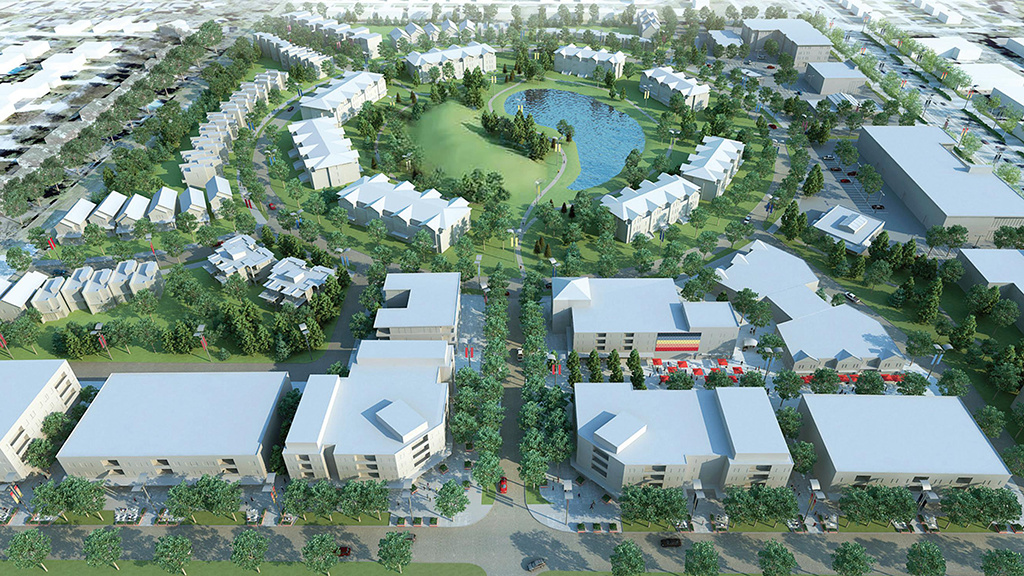
The announcement that Naawi-Oodena, the site of the former Kapyong Barracks in southwest Winnipeg, will host a portion of the 4,000 affordable housing units by Build Canada Homes (BCH) marks a significant and strategic development in Canada’s approach to residential construction. With an ambitious goal set to break ground in 2026, this initiative aligns with the federal government’s broader commitment to enhance housing availability across the country.
As Canada’s largest urban reserve, Naawi-Oodena spans 160 acres and is positioned strategically between established neighborhoods such as Tuxedo and River Heights. Urban geography expert Jino Distasio highlights the area’s advantageous access to transportation and amenities, which will bolster the success of the new housing units. This redevelopment has been two decades in the making, indicating a slow but steady evolution in urban planning—a vital aspect for community growth and cohesion.
BCH, created in response to a Liberal election promise, will manage non-market housing across a spectrum of incomes, underpinning a crucial shift towards modular and factory-built housing solutions. With an initial investment of $13 billion, the federal agency aims to double housing construction rates, thereby addressing the urgent need for affordable options in Canadian cities like Winnipeg, Dartmouth, and Toronto.
A recent survey conducted by the Modular Building Institute reflects a robust potential within Canada’s modular construction sector, revealing that 84% of manufacturers report some degree of unused capacity. This insight presents a promising opportunity for scaling up production to meet housing demands. Helen Goodland from Scius Advisory points out that while Canada possesses considerable prefab capabilities, challenges remain, including underutilized production shifts across provinces. Notably, British Columbia leads in innovative manufacturing solutions, while Alberta and Ontario present untapped potential due to their unique strengths.
The logistics of producing and distributing building materials remain a critical factor. Rick Jeffery, CEO of the Canadian Wood Council, notes that proximity to major metropolitan areas influences manufacturing strategies, emphasizing the need for efficient supply chains to mitigate costs associated with transporting materials over long distances.
In conclusion, the establishment of affordable housing units at Naawi-Oodena represents a vital step towards alleviating Canada’s housing crisis. With a focus on factory-built methods, this initiative signals not only a transformative approach to residential construction but also underscores the collaborative potential of urban planning, manufacturing capacity, and logistical efficiency. As the plans unfold, industry stakeholders will be keenly observing the operational capacity and responsiveness of the modular housing sector to meet these ambitious goals.
📋 Article Summary
- Naawi-Oodena, a former military barracks in Winnipeg, will host some of the 4,000 affordable housing units planned by Build Canada Homes (BCH) starting in 2026.
- BCH aims to accelerate the construction of non-market housing across Canada, backed by an initial capital of $13 billion.
- The Canadian modular building industry shows significant unused capacity, indicating potential for scaling up production to meet housing demands.
- Regional analyses reveal varying strengths in prefab manufacturing across Canada, with British Columbia leading in advanced technology and Alberta excelling in factory-based production.
🏗️ Impact for Construction Professionals
The announcement regarding affordable housing development at Naawi-Oodena presents significant opportunities for construction professionals. With the federal government investing heavily in modular, factory-built housing, construction companies should pivot quickly to capitalize on this trend.
Practical Business Implications: Companies could secure contracts for these projects, especially in regions earmarked for construction, leading to increased revenue.
Potential Opportunities: The projected 4,000 units — potentially scaling up to 45,000 — indicate high demand for prefabricated materials and construction services. Firms specializing in modular construction should enhance their operational capabilities and consider partnerships with manufacturers.
Challenges: The current capacity in Canada shows some manufacturers operate underutilized. This could lead to longer lead times if demand surges. Companies must ensure they have reliable supply chains and are ready to scale operations.
Actionable Insights: Conduct a market assessment to identify weaknesses in your supply or staffing. Expand workforce training in modular construction techniques, and explore relationships with manufacturers who are keen to ramp up production.
Incorporating these strategies will not only improve day-to-day operations but also align your firm with the strategic direction of federal housing initiatives.
#Winnipeg #site #chosen #location #federal #affordable #housing #initiative

