
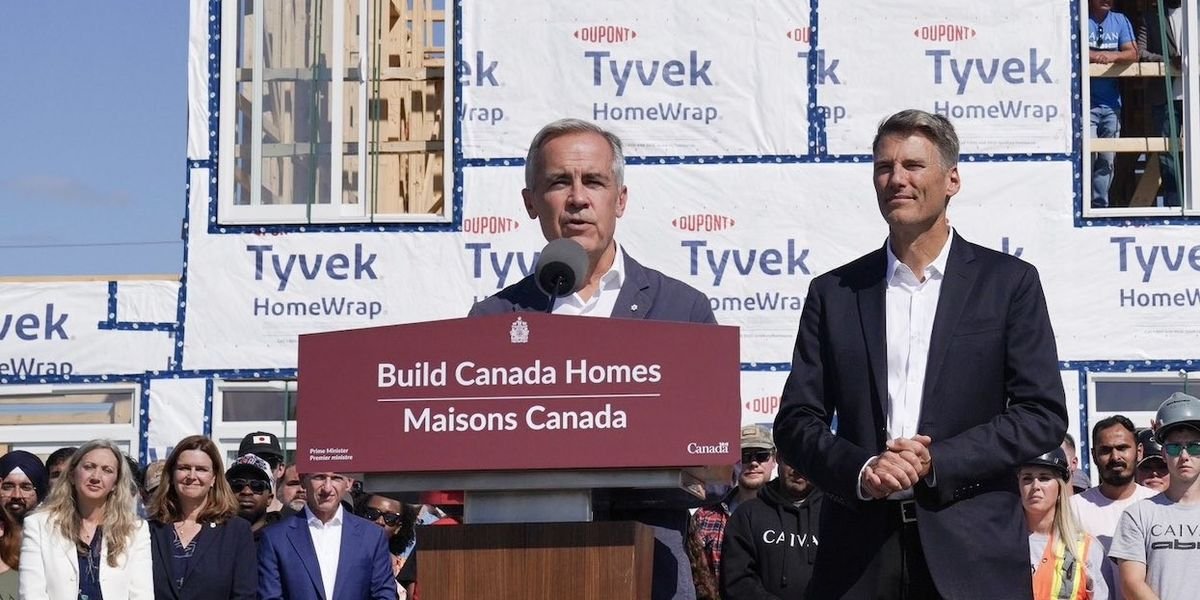
Will Build Canada Homes Truly Construct Homes, or Merely Wishful Thinking?
On September 14th, the federal government introduced Build Canada Homes (BCH), a new initiative aimed at addressing Canada’s housing crisis through a suite of strategic investments and policy reforms. Targeting the delivery of up to 45,000 factory-built homes, BCH positions itself as a centralized hub for affordable housing solutions. This announcement represents a significant governmental effort to tackle the pressing need for increased housing supply, given the Canada Mortgage and Housing Corporation (CMHC) estimates of up to 4.8 million new housing starts required by 2035 for affordability restoration.
Despite this positive stride, the immediate impact of BCH appears minimal. The initial housing projection constitutes a fraction of the immense need highlighted earlier this year, underscoring a potential disconnect between targeted initiatives and overarching housing demands. BCH’s focus on non-market housing, particularly for low-income households and Indigenous communities, is commendable; however, it notably overlooks critical sectors such as senior and student housing. Furthermore, the absence of specific strategies for middle-class and market-rate affordability raises concerns about the initiative’s inclusivity.
Key instruments within BCH’s framework include “flexible financial incentives” and leveraging public land, specifically access to 88 federal properties covering approximately 463 hectares. However, the geographic distribution of these properties—primarily outside major urban centers—limits their potential impact in high-demand locales where land values significantly affect housing viability.
To bolster BCH’s effectiveness, several policy recommendations emerge. First, implementing densification bonuses could incentivize high-density residential developments, reducing development costs and enhancing affordability. Second, the proposed rebates on Canadian-made materials could stimulate the domestic construction sector and bolster job creation. Extending temporary GST/HST rebates to encompass all housing types, including densified condominiums, may further spur immediate housing starts by alleviating upfront costs.
Additionally, self-certification for modular construction could streamline the approval process, significantly diminishing construction timelines while maintaining quality standards. Lastly, opening strategic low-rise zones to greater intensification could facilitate efficient land use, particularly near transit hubs, elevating the housing supply in urban hotspots.
As BCH navigates its inaugural phases, the potential for impactful change hinges not only on substantial funding but also on the affirmation of innovative policies that enable the private sector to play its crucial role. Without such reforms, the initiative risks devolving into a mere symbol of ambition without delivering tangible housing solutions. In the evolving landscape of Canadian housing, focused and integrated approaches are essential for fostering real progress towards achieving affordability and availability in the housing market.
📋 Article Summary
- The federal government launched Build Canada Homes (BCH) to tackle Canada’s housing crisis, aiming for bold investments and increased housing supply, targeting up to 45,000 new factory-built homes.
- While BCH focuses on low-income households and partnerships with Indigenous communities, it overlooks critical needs in senior living, student housing, and middle-class affordability.
- Proposed measures include financial incentives for the private sector and leveraging public land; however, much of this land is not located in high-demand urban areas.
- Effective policy reforms, such as densification bonuses and rebates for Canadian-made materials, are crucial to support BCH’s goals and genuinely enhance housing supply and affordability.
🏗️ Impact for Construction Professionals
With the launch of Build Canada Homes (BCH), construction professionals have a unique opportunity to adapt and thrive in the evolving housing market. The federal emphasis on affordable housing means increased demand for construction services, particularly in high-density developments. Here’s how you can respond:
-
Leverage Financial Incentives: Stay abreast of potential “flexible financial incentives” from BCH. Position your company to qualify for these grants, which could significantly reduce costs.
-
Adopt Modular Construction: As BCH seeks to streamline construction timelines, consider incorporating factory-built methods. This can enhance efficiency and profitability.
-
Utilize Local Materials: Implement the Buy Canadian Policy by using domestic materials. By doing so, you may qualify for rebates that lower project costs, ultimately improving margins.
-
Engage in Partnerships: Explore collaborations with BCH and other stakeholders, particularly for non-market housing initiatives, which can expand your project portfolio.
- Adapt to Market Needs: Be proactive in addressing gaps in the market, such as senior living and student housing, which BCH has overlooked. Tailoring projects to meet these needs can differentiate your business.
By integrating these strategies, you can position your company advantageously in a competitive market poised for change.
#Build #Canada #Homes #Build #Homes #Hope

