
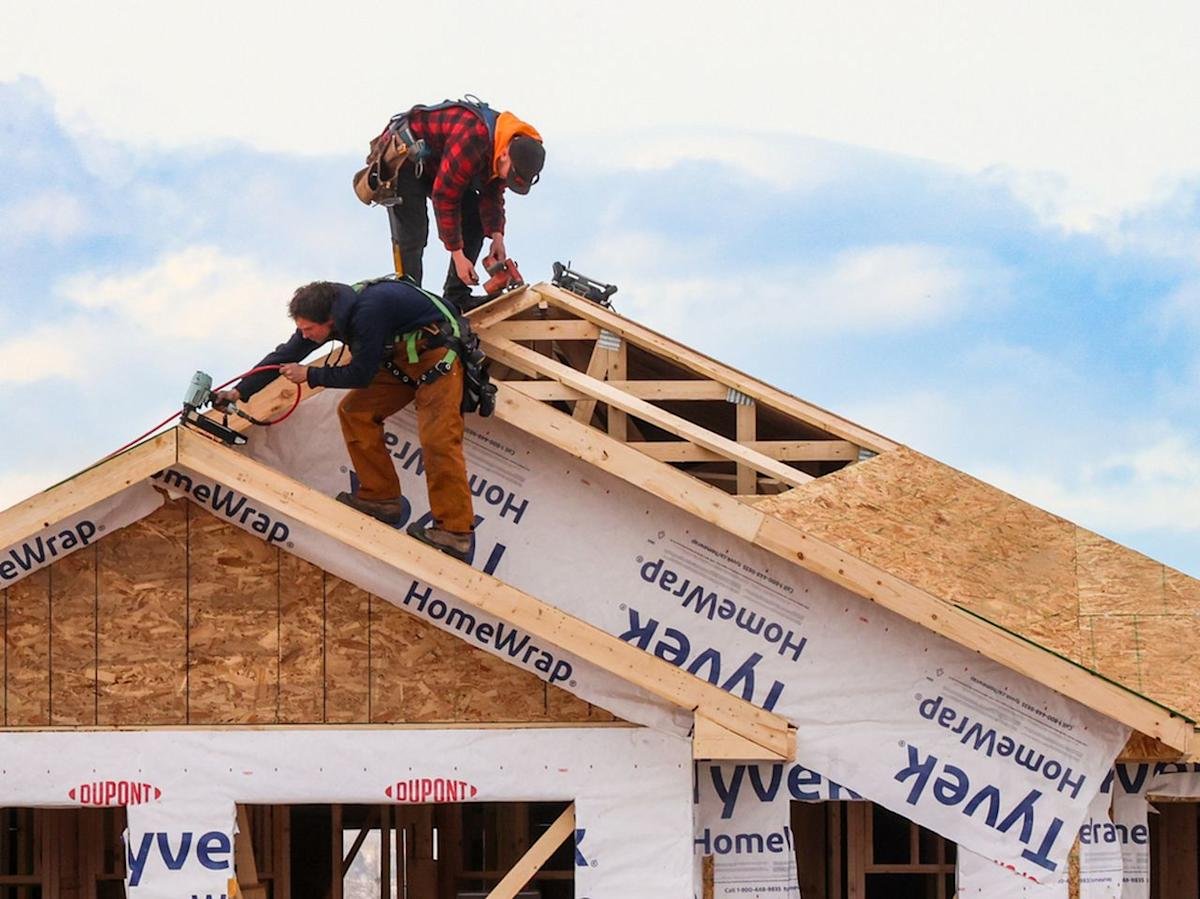
PBO Projects to Construct 26,000 Homes in Canada Over Five Years—Still Short of Demand
In a recent report by the Parliamentary Budget Office (PBO), the federal government’s newly established housing agency is projected to significantly impact Canada’s housing supply over the next five years, with an anticipated addition of 26,000 housing units. However, this increase reflects only a 2.1 percent uptick in housing completions relative to the PBO’s baseline forecast, addressing a mere 3.7 percent of the projected units necessary to close the existing housing gap.
The Canada Mortgage and Housing Corporation (CMHC) has quantified the challenge, indicating that homebuilding efforts must nearly double—ranging between 430,000 and 480,000 units per year over the next decade—to restore affordability levels witnessed in 2019. To effectively close the supply gap, the PBO estimates an annual requirement of 290,000 units, underscoring the stark contrast between current projections and what is necessary to meet demand.
The federal initiative, known as Build Canada Homes, launched by Prime Minister Mark Carney, aims to accelerate the supply of affordable housing and has been allocated $13 billion in the federal budget for implementation over the next five years. However, despite assurances that this agency is expected to double the pace of housing construction, the PBO has criticized the lack of a clear plan to achieve this ambitious goal.
Of the 26,000 anticipated housing units, projections indicate that 13,000 will be designated as affordable, targeting low-income households. While this addition seeks to alleviate some of the burdens associated with housing affordability, the PBO warns that these new units will only partially offset the decline in overall affordability support. Compounding the challenges, the federal budget has instituted cuts to CMHC housing programs, reducing funding by $2.4 billion from 2026-27 to 2029-30, alongside annual reductions of $860 million thereafter.
In light of these developments, Housing Minister Gregor Robertson has responded to critiques by emphasizing the potential for the initial $13 billion investment to attract further private sector participation in homebuilding. He referenced an additional $51 billion earmarked for housing-enabling infrastructure, asserting that this combined investment represents a substantial commitment to enhancing the housing landscape in Canada.
In conclusion, while the federal government’s initiatives signify a proactive approach to addressing housing shortages, critical skepticism regarding the feasibility and sufficiency of projected outputs must remain at the forefront. The construction industry must navigate these changes cautiously, balancing the push for more units with the reality of funding constraints and the imperative for sustainable affordability solutions.
📋 Article Summary
- The Parliamentary Budget Office (PBO) estimates that Canada’s new housing federal agency will add 26,000 housing units over five years, addressing only 3.7% of the existing housing gap.
- Homebuilding needs to nearly double to 430,000-480,000 units annually to restore affordability to 2019 levels, with 290,000 units needed to close the supply gap.
- The federal budget allocates $13 billion for the new agency but also cuts funding to existing housing programs by $2.4 billion starting in 2026-27.
- Housing Minister Gregor Robertson emphasized that the funding aims to attract private investment in homebuilding, though specifics on achieving construction goals remain unclear.
🏗️ Impact for Construction Professionals
The recent announcement regarding Canada’s new housing agency and the projection of adding 26,000 housing units over the next five years presents both opportunities and challenges for construction professionals.
Opportunities: Companies should consider partnering with the federal agency to secure contracts for affordable housing projects, especially since 13,000 of those units will be aimed at low-income households. The anticipated increase in homebuilding suggests a growing demand for skilled labor and materials, presenting an opportunity for construction professionals to expand their workforce and supplier networks.
Challenges: With the projected need for 290,000 units annually to close the housing gap, existing companies may face intense competition. Additionally, cuts to programs like the Canada Housing Benefit could impact funding for existing projects, affecting cash flow.
Actionable Insights: Construction firms should begin strategic planning focused on affordable housing, investing in marketing efforts to position themselves as experts in this area. Establishing a strong government relations strategy will be vital for staying informed about upcoming contracts and funding opportunities.
Operational Impacts: Adjusting business models to accommodate larger-scale and faster-paced projects will be essential, as well as training staff on best practices for affordable housing development to maintain compliance and quality standards.
#PBO #projects #Build #Canada #Homes #add #housing #units #fraction #needed #years

