
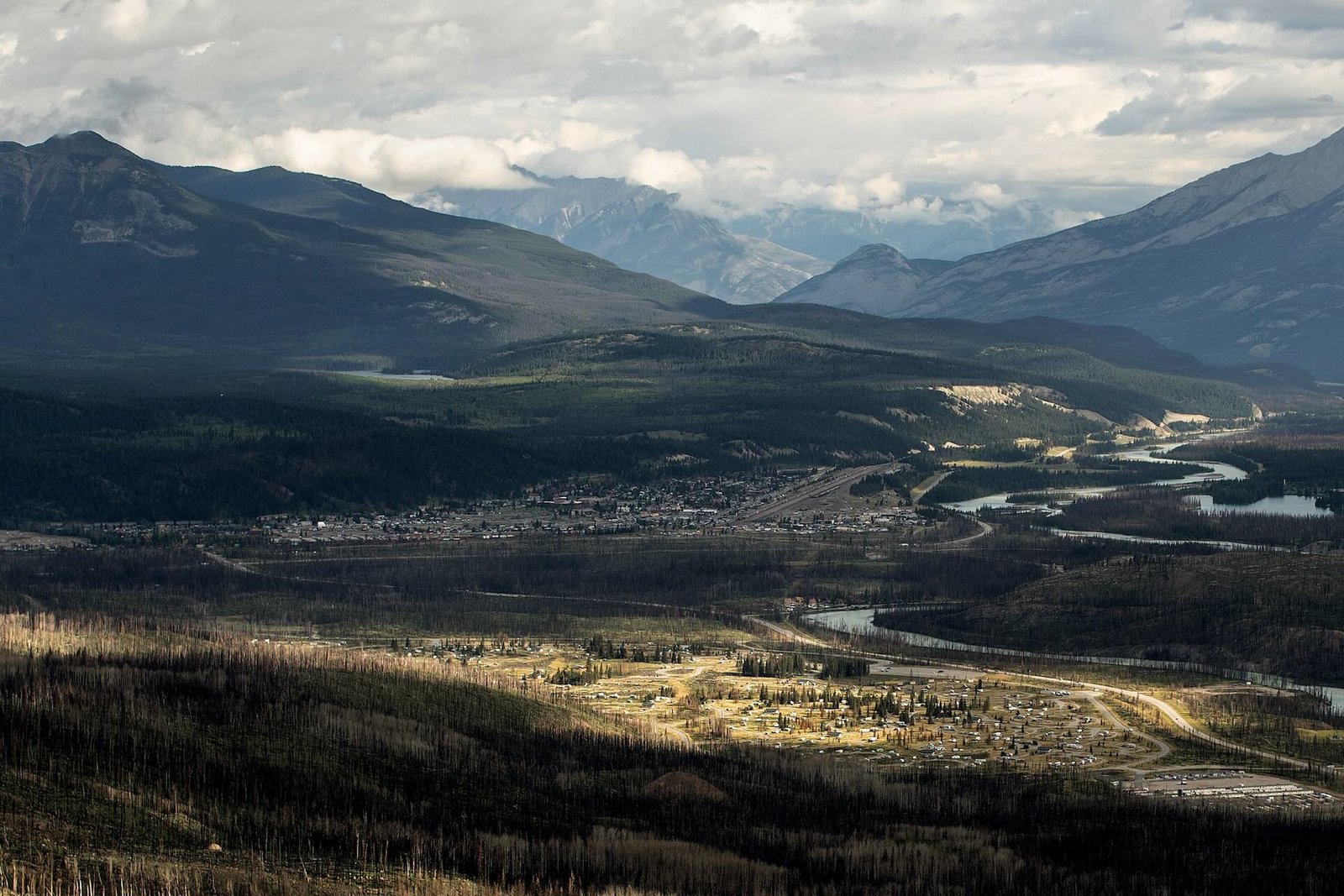
Jasper’s Efforts to Rebuild Highlight the Severity of Canada’s Housing Crisis
Rebuilding Jasper: Navigating Challenges in the Aftermath of the 2024 Wildfire
The town of Jasper, Alberta, faces significant challenges in its recovery from one of the most destructive wildfires in Canadian history, which engulfed over 33,000 hectares and resulted in the evacuation of 20,000 residents. Key developments include the rebuilding of just two homes—a stark contrast to the 806 structures lost. As the town grapples with its rebuilding efforts, industry professionals are acutely aware of the myriad obstacles impacting construction timelines and costs.
A primary impediment is Jasper’s unique location within a national park, which imposes strict zoning regulations and rigorous environmental standards governed by Parks Canada. This federal oversight slows down the approval process for building permits, leaving the town with a patchwork of vacant lots and underutilized spaces nearly a year after the disaster. To date, the municipality has processed 132 rebuilding applications and issued 104 permits, with only 50 construction sites active—a reality check against the federal government’s ambitious goal of doubling homebuilding across Canada to 500,000 units annually.
The economic implications are substantial. A recent report highlights that rebuilding costs in Jasper could be 1.5 times higher than pre-fire valuations, primarily due to labor shortages and skyrocketing material prices exacerbated by external trade pressures. Recruitment challenges persist, with industry leaders citing daily wages for skilled trades as high as $400. Increasing costs severely hinder residents’ financial capacities to reconstruct, as seen in the case of local landlord Soto Korogonas, who now faces an estimated $500,000 shortfall to rebuild his lost apartment building.
Moreover, residents still contend with insurance disputes and environmental assessments. Many properties require thorough testing for toxins, significantly delaying the rebuilding process. Only three foundations have been poured for new homes thus far, leading some residents to question the viability of returning to their hometowns.
Despite these formidable obstacles, Jasper’s rebuilding journey also presents opportunities for innovation in construction practices and community support frameworks. Municipal leaders like Michael Fark emphasize the need for high-density developments to alleviate the underlying housing crisis—an issue the fire exacerbated, with plans already being discussed to revise zoning laws for taller buildings and additional units.
As Jasper embarks on this long recovery, the implications of its rebuilding efforts resonate far beyond local borders, serving as a case study in resilience, community planning, and policy adaptation amid ongoing national housing challenges. The evolving narrative of Jasper will undoubtedly influence future approaches to sustainable rebuilds following natural disasters, reinforcing the critical need for collaboration among local governments, construction firms, and regulatory bodies.
📋 Article Summary
- A devastating wildfire in July 2024 destroyed over 800 homes in Jasper, Alberta, including many local businesses, forcing a massive evacuation of residents and causing significant loss of life.
- The recovery efforts are hindered by complex regulations due to Jasper’s location within a national park, which complicates rebuilding and zoning for new housing.
- Only two homes have been rebuilt as of August 2025, highlighting challenges such as labor shortages and high construction costs in the region.
- Jasper’s situation reflects broader national housing issues, questioning the federal government’s ambitious goals to significantly increase homebuilding across Canada.
🏗️ Impact for Construction Professionals
The wildfire crisis in Jasper presents both challenges and opportunities for construction professionals. The urgent need to rebuild over 800 homes signifies a substantial demand for construction services. Owners and project managers should pivot their strategies to capitalize on this market by enhancing operational flexibility and prioritizing quick permit processing.
Actionable Insights:
- Develop Partnerships: Collaborate with local government and Parks Canada to streamline permitting processes, ensuring quicker project approvals.
- Expand Labor Recruitment: Address labor shortages by reaching out to labor pools beyond the local area, possibly offering incentives for relocation or remote work arrangements.
- Focus on Sustainable Practices: Adopt eco-friendly construction methods and materials, appealing to heightened environmental scrutiny and consumer preference.
- Diversify Offerings: Consider modular and prefabricated construction methods to expedite timelines and efficiently use resources.
- Monitor Financial Health: Keep a close eye on cash flow and adjust pricing models to accommodate increased costs amid labor shortages and material inflation.
Being proactive now can set your business apart as a leader in recovery efforts and position you to meet the pressing housing needs in Jasper and beyond.
#Jaspers #struggle #rebuild #shows #scale #Canadas #housing #crisis

