
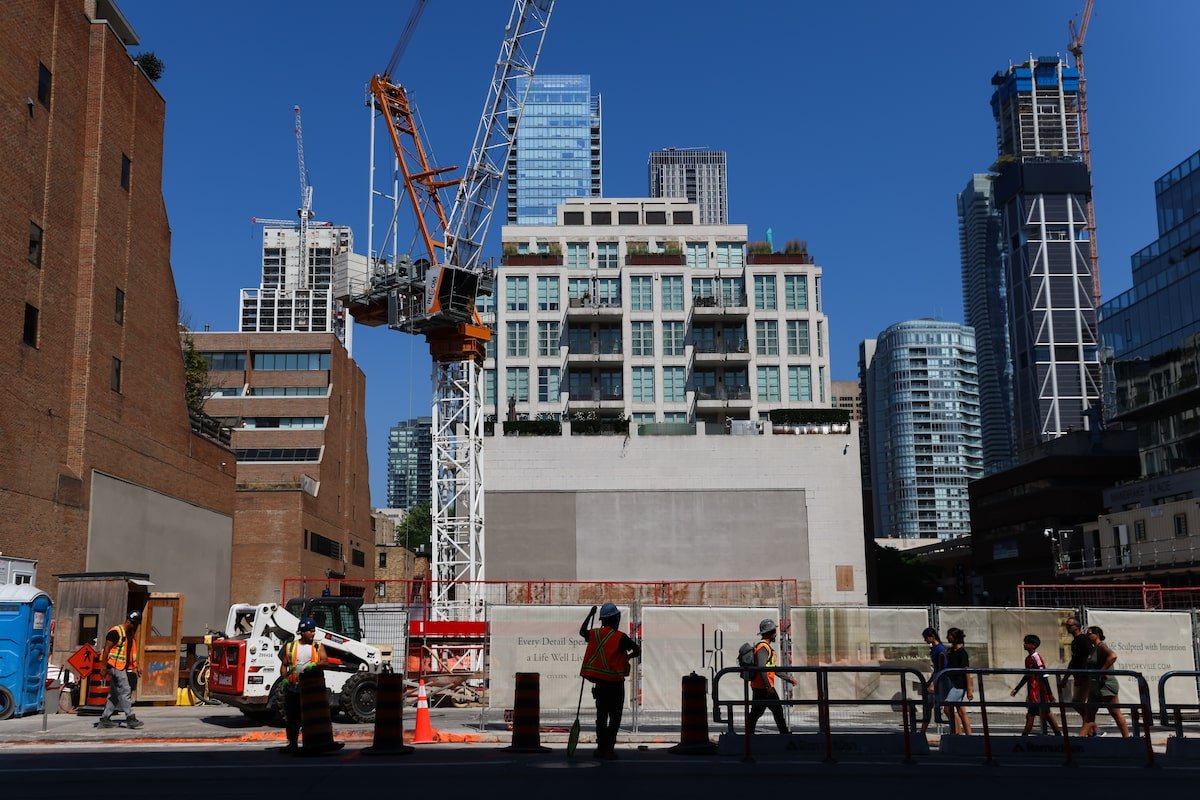
Fewer Toronto Condos Under Construction Than Federal Estimates Suggest, Industry Data Reveals
The latest data from the Canadian construction industry reveals a concerning decline in condominium starts in the Toronto region, significantly exceeding government reports. While the Canada Mortgage and Housing Corporation (CMHC) recorded 6,106 condo starts in the first half of 2024, industry research firms Urbanation Inc. and Zonda reported sharply lower figures of 1,950 and 2,300 starts, respectively. This disparity draws attention to the varying methodologies employed to gauge construction activity, indicating that the CMHC data may lag behind real-time market conditions due to its later-stage measurement approach, which begins after the foundation pour has commenced.
The implications of this data are profound, as it signals a continued downturn in the housing sector, with starts decreasing by approximately 58 to 65 percent compared to the previous year. Notably, Urbanation and Zonda have identified that the downturn began in the latter half of 2023, suggesting an earlier and more immediate recognition of the challenges facing the market than that provided by the CMHC’s metrics. This disconnect raises questions about the effectiveness of federal housing data in shaping timely and responsive policy decisions in light of current economic conditions.
An important distinction arises from the two different counting methodologies. CMHC’s approach confirms that construction has moved beyond the planning and excavation phases, thus arguably providing a more stable long-term overview of housing developments. Conversely, the earlier recognition utilized by Urbanation and Zonda allows for swifter insights into the market’s rapid decline, which can be critical for stakeholders assessing risk and investment opportunities. As noted by industry experts, the ability to measure real-time activity provides a clearer picture of market sentiment and allows for quicker decision-making, which is especially crucial in a declining market.
The broader context of this slowdown includes diminishing preconstruction sales and financial strain on developers, leading to project cancellations and even receiverships. The current operational landscape poses significant challenges for developers as they navigate liquidity issues and shifting buyer sentiments. With many potential projects halted or abandoned, there is a pressing need for both government intervention and innovative strategies to stimulate the housing market.
In conclusion, the discrepancies in condo start data between CMHC, Urbanation, and Zonda underscore critical challenges in accurately assessing the housing sector’s health. As developers face increasing financial pressures, a coordinated response from industry stakeholders and policymakers will be essential to mitigate further declines and support sustainable growth within the Canadian construction landscape.
📋 Article Summary
- Recent data shows a stark discrepancy in condominium starts in Toronto, with CMHC reporting 6,106 starts compared toUrbanation Inc. and Zonda’s lower counts of 1,950 and 2,300, respectively.
- The decline in new condo construction is more severe than reported, with industry data indicating a drop of up to 65% over the first half of 2024, signaling a slowdown that began in late 2023.
- Methodological differences affect tracking of construction starts, with CMHC measuring at a later stage than Urbanation and Zonda, leading to delayed reflections of the downturn.
- Many developers are struggling with preconstruction sales diminishing, resulting in canceled projects and financial difficulties across the housing sector.
🏗️ Impact for Construction Professionals
The recent data discrepancy between CMHC and industry groups regarding condo starts in Toronto highlights critical considerations for construction professionals. Owners and project managers should act quickly to recalibrate their expectations and strategies. With a notable decline in construction starts reported—58% to 65%—it’s crucial to assess current project pipelines and operational costs.
Opportunities: This decline may create gaps in the market for developers ready to pivot quickly to affordable housing solutions. Engaging in partnerships and diversifying offerings could position companies favorably.
Challenges: With many projects facing cancellation or postponement, tight project financing and potential receiverships are emerging concerns. Construction professionals should scrutinize their financial health and adapt contingency plans accordingly.
Actionable Insights: Consider investing in more robust market analysis tools that mirror the methodologies used by Urbanation and Zonda. This will ensure real-time insights into market conditions. Reassessing resource allocation, optimizing supply chains, and fostering relationships with lenders can bolster resilience.
Ultimately, understanding these dynamics is essential for strategic planning and effective day-to-day operations amidst a shifting landscape.
#Toronto #condos #built #federal #figures #industry #data #show

