
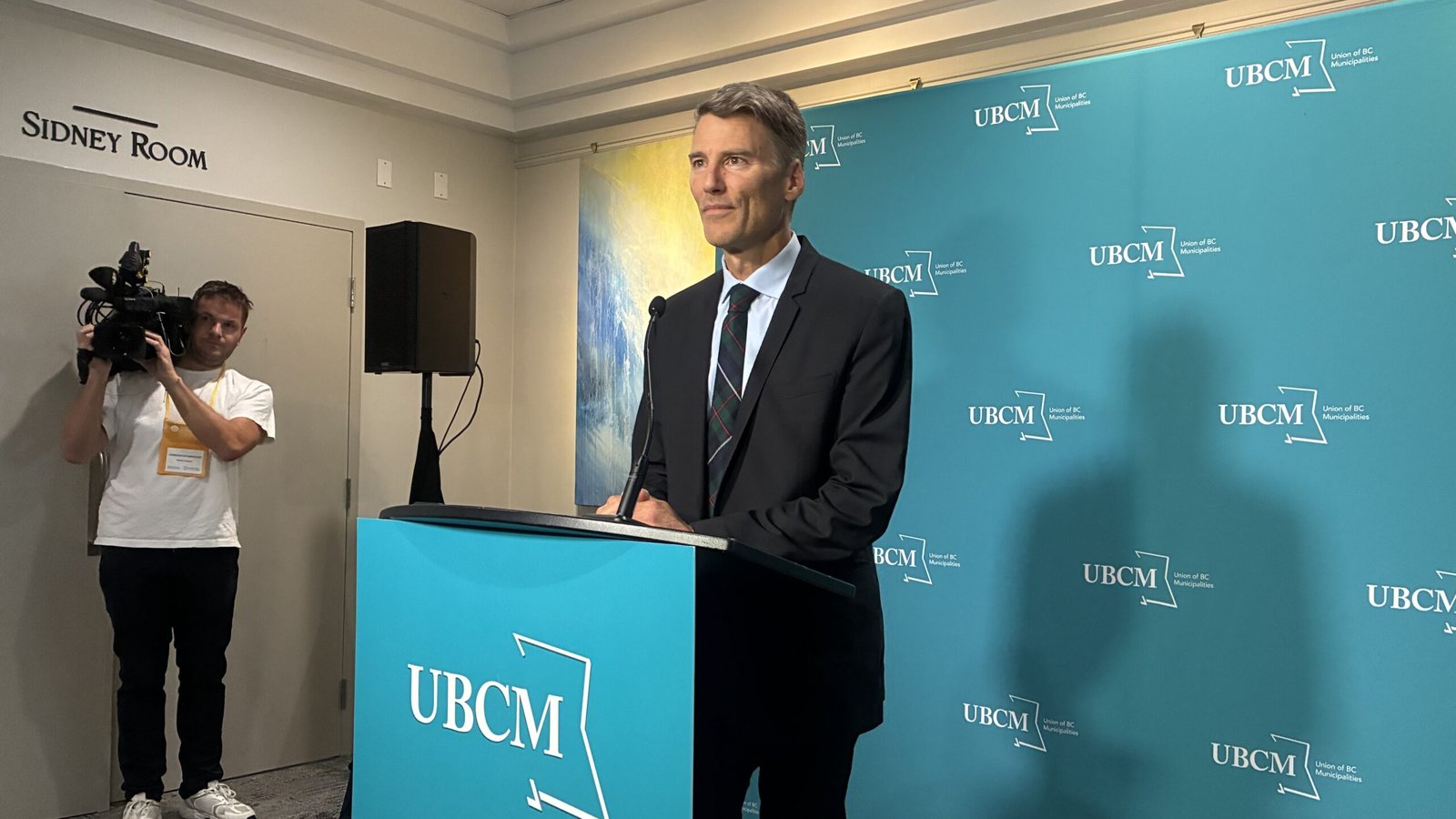
Federal Housing Minister Promotes Housing Plan to Local Officials in B.C.
Housing and Infrastructure Minister Gregor Robertson recently unveiled the federal government’s latest affordable housing initiatives during a presentation to local government officials at the Union of B.C. Municipalities conference in Victoria. This discourse highlighted the critical challenges faced by municipalities in aligning development goals with sustainable infrastructure investment and affordable housing. With an initial capital investment of $13 billion allocated to Build Canada Homes (BCH), the federal initiative aims to expand affordable and supportive housing options across the country.
A significant portion of this funding, approximately $1 billion, is earmarked for modular supportive housing targeted at individuals experiencing or at risk of homelessness. Robertson’s address underscored the high development cost charges (DCCs) that have emerged as a prominent barrier to the timely construction of new homes. These charges represent one-time fees collected by municipalities from developers to fund essential infrastructure such as roads, water systems, and parks, which are vital for supporting population growth.
Robertson noted the federal government’s commitment to introducing a program later this fall that seeks to reduce these DCCs, striking a balance between alleviating costs for developers and ensuring that local governments can still invest in necessary housing infrastructure. According to Robertson, the intent is to foster an environment conducive to building affordable homes without compromising local development resources.
Part of the BCH strategy includes leveraging federally-owned lands for housing projects, although it is noteworthy that none of the six sites identified for potential development are situated in British Columbia. Despite the province hosting two federal sites in the Vancouver area and one in Vernon, these locations were not included in the initial plan to develop approximately 4,000 affordable homes.
Robertson faced inquiries regarding the omission of B.C.’s federal sites during a media Q&A but maintained a focus on identifying the most strategic federal lands for housing initiatives. Furthermore, he stated that Ottawa is expected to announce additional land available for potential development later this fall.
The implications of these initiatives are significant for the construction industry. Reduced development charges could lead to increased project viability for developers, potentially unlocking new affordable housing units in an increasingly constrained market. However, it remains essential for stakeholders to monitor how these changes will facilitate effective collaboration between federal initiatives and municipal infrastructure funding mechanisms, ultimately resulting in the sustainable delivery of housing solutions critical to addressing homelessness and affordability challenges across Canada.
📋 Article Summary
- Housing and Infrastructure Minister Gregor Robertson addressed local officials in Victoria, promoting the federal government’s new affordable housing initiatives during the Union of B.C. Municipalities conference.
- The Build Canada Homes initiative includes a $13 billion capital investment, with $1 billion earmarked for modular supportive housing for those experiencing or at risk of homelessness.
- Robertson acknowledged high development cost charges (DCCs) as a barrier to home building, with plans to announce a new program to reduce these costs while ensuring funding for necessary infrastructure.
- Although six federally-owned sites are selected for development, none are in B.C., prompting questions about the strategic selection of locations for affordable housing projects.
🏗️ Impact for Construction Professionals
The recent announcement of the federal government’s $13 billion affordable housing initiative presents significant opportunities for construction professionals. Owners and project managers should immediately assess how their companies can participate in upcoming projects, particularly with notable funding allocated for modular supportive housing. Engaging with local municipalities to stay informed about potential contracts and site developments will also be crucial; understanding the new program aimed at lowering development cost charges (DCCs) will help in strategic planning and financial forecasting.
Challenges may arise from navigating the shifts in municipal policies and competition for these contracts. Construction firms should proactively build relationships with local governments to facilitate smoother project proposals and leverage tax incentives associated with new housing projects.
Actionable insights include enhancing capabilities for modular construction and sustainability practices, as these are likely to be focal points in government projects. Lastly, consider adjusting project timelines and resource allocations to remain agile, ensuring your team can swiftly respond to contract opportunities as they arise. This initiative could redefine project pipelines, ultimately impacting your day-to-day operations by prioritizing affordable housing initiatives over traditional projects.
#Federal #housing #minister #touts #housing #plan #local #B.C #officials #Creston

