
Fact File: Allegations of Government-Constructed Fake Homes for Photo Ops Are Misleading
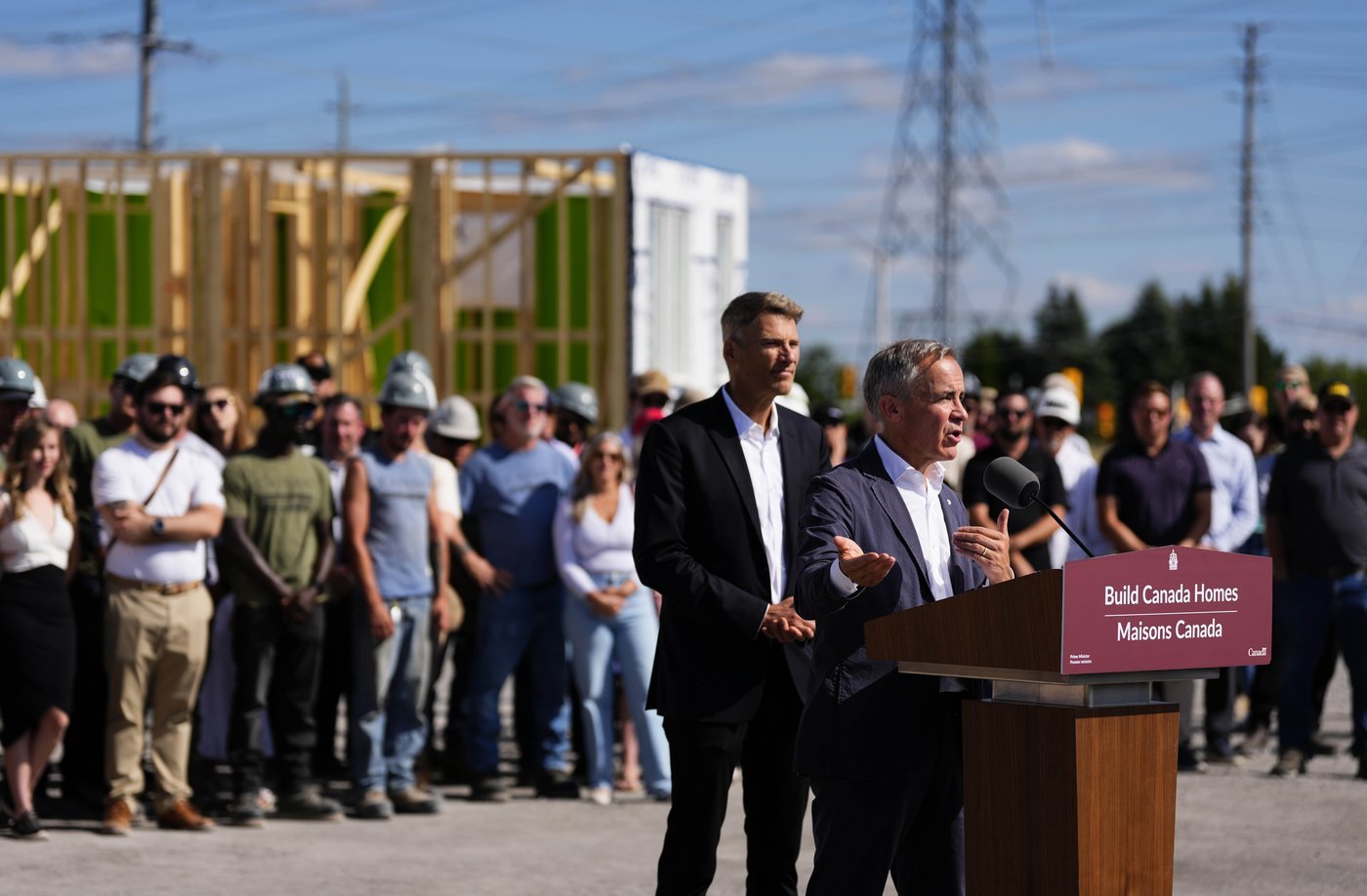
On September 14, 2025, Prime Minister Mark Carney announced a significant initiative under the Build Canada Homes program, allocating a budget of $13 billion to construct 4,000 homes across six federally owned sites. This initiative aims to address Canada’s pressing housing shortage and reflects a robust government commitment to enhancing housing accessibility nationwide. The announcement was made in Nepean and has since garnered attention, not only for its ambitious goals but also for the controversy surrounding the presentation.
The announcement showcased three modular homes constructed by Caivan Homes, designed to demonstrate the potential of offsite manufacturing and rapid assembly techniques. Notably, the homes were assembled in mere days, reinforcing the efficiency of modular construction. Carney emphasized that the modular homes were prototypes intended to illustrate manufacturing capabilities rather than being permanent installations. One of the showcased units was already slated for relocation to Nunavut, indicating the temporary status of the setup at the announcement site.
Critics have emerged, particularly on social media, alleging that the government staged a “fake construction site” due to the modular homes being removed shortly after the event. Despite these claims, it is essential to clarify that the homes were never intended to represent a finished housing development. The assembly was strategically designed to allow media and the public to engage with the construction process visibly. Frank Cairo, CEO of Caivan Homes, clarified that the prototype builds were an integral part of their manufacturing approach and that there were no additional costs incurred in this demonstration.
Beyond the initial housing goals, the $13 billion budget encompasses several projects intended to support broader housing initiatives. For instance, a $1.5 billion rental protection fund and a commitment of $1 billion dedicated to supportive housing for homeless individuals reflect the government’s multi-faceted approach to tackling housing issues. This reveals a strategic investment not only in new housing construction but also in supportive frameworks that address homelessness and housing security.
In conclusion, while the Build Canada Homes initiative represents a proactive step toward alleviating housing shortages, it also highlights the need for transparent communication regarding the use of public resources. As the program unfolds, its implications for the construction industry, particularly in the realm of modular building practices and collaborative housing solutions, will be integral in shaping Canada’s housing landscape in the years to come.
📋 Article Summary
- Build Canada Homes plans to construct 4,000 homes on six federal sites with an initial budget of $13 billion, as announced by Prime Minister Mark Carney.
- Accusations emerged on social media claiming the government staged a fake construction site, as the modular homes shown were not permanent and were later disassembled.
- The homes displayed during the announcement were prototypes meant to showcase modular construction potential, not to represent a finished housing project.
- The $13 billion budget will also support various programs, including a $1.5 billion rental protection fund and $1 billion for supportive housing initiatives.
🏗️ Impact for Construction Professionals
The $13 billion Build Canada Homes initiative presents significant opportunities for construction professionals. Owners and project managers should immediately assess how their firms can align with the government’s goals, particularly in modular and supportive housing. Given the focus on modular construction, companies should consider investing in these technologies or partnerships to capitalize on this trend.
To prepare, conduct market research to identify upcoming projects within the initiative. Engage with suppliers of modular materials or technologies, as establishing these relationships now can enhance your capabilities and competitiveness.
Be mindful of the financial implications, such as potential fluctuations in construction costs and labor availability. Staying informed about budget allocations—including the $1.5 billion rental protection fund—can open avenues for collaboration or funding opportunities.
Strategically, integrate these developments into your long-term planning, considering how to position your company in potential bidding processes. Enhance your operational efficiency to handle increased project demand. Ultimately, this announcement could elevate your visibility in a rapidly evolving housing market, provided you proactively adapt and respond.
#Fact #File #Claims #government #built #fake #homes #photo #misleading

