
Fact Check: Allegations That Government Constructed Fake Homes for Photo Opportunity Are Misleading
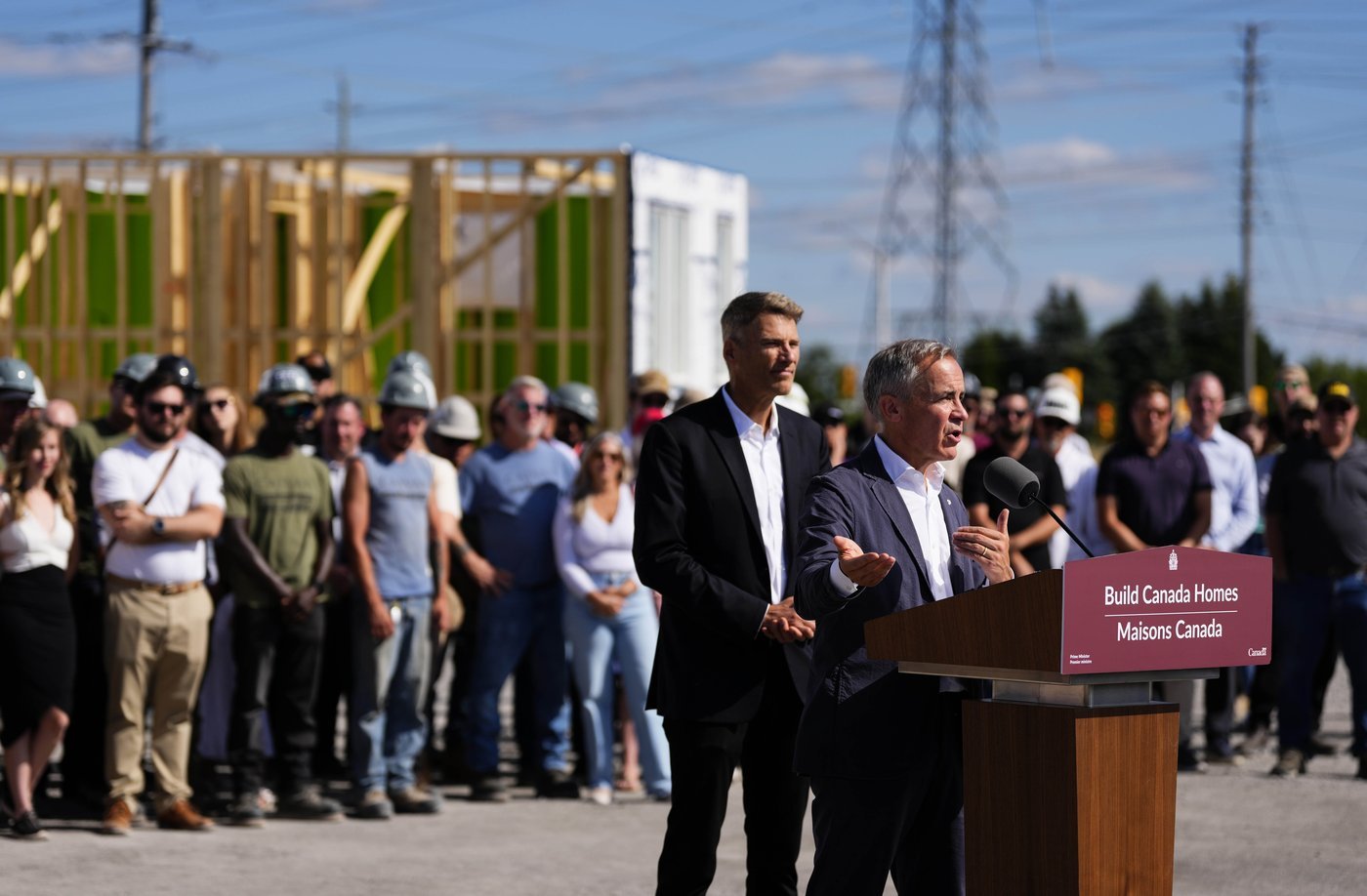
On September 14, Prime Minister Mark Carney announced a significant initiative dubbed Build Canada Homes, which will facilitate the construction of 4,000 homes on six federally owned sites, backed by an initial budget of $13 billion. This initiative aims to address Canada’s pressing housing crisis, amidst rising construction costs and a demand-supply imbalance in the housing sector. During a press conference in Nepean, Carney underscored the project’s importance, emphasizing the need for affordable housing solutions in various communities across Canada.
However, the announcement was marred by controversy when social media erupted with claims that the construction site showcased during the press conference was fabricated. Detractors argued that the modular homes presented were incomplete and subsequently dismantled, suggesting a lack of authenticity in the announcement. A viral YouTube video titled “Mark Carney CAUGHT Creating FAKE CONSTRUCTION SITE For a ‘Housing Announcement’” garnered over 109,000 views, fueling skepticism regarding the government’s commitment to the housing agenda. Critics pointed to an estimated cost of $3.2 million per home as indicative of excessive spending in the construction sector.
In an attempt to clarify the situation, Carney confirmed in his remarks that the homes were prototype builds by Caivan Homes and were never intended to serve as permanent installations. The CEO of Caivan Homes, Frank Cairo, elaborated that the homes were part of a manufacturing demonstration intended to showcase the capabilities of modular homes. Modular construction is increasingly recognized for its efficiency and adaptability, allowing homes to be produced off-site and assembled rapidly on location. Cairo assured that the process involved no additional costs, seamlessly aligning with Caivan’s existing production methodology.
It is noteworthy that the $13 billion budget is not exclusively allocated for the construction of the 4,000 homes. A portion of these funds will also support various programs under Build Canada Homes, including a $1.5 billion rental protection fund and a $1 billion commitment to supportive housing aimed at assisting those experiencing homelessness. This multifaceted approach indicates a broader strategy to mitigate housing issues while fostering collaboration with provincial, municipal, territorial, and Indigenous governments.
Ultimately, while the launch of Build Canada Homes is a promising effort to tackle housing shortages, the controversy surrounding its rollout underscores the ongoing scrutiny faced by government initiatives in the construction sector. The implications of this program reflect a growing acknowledgment of the complexities involved in addressing housing needs in a dynamic economic environment. The industry will watch closely as Step towards achieving these ambitious housing goals unfolds.
📋 Article Summary
- Build Canada Homes will manage the construction of 4,000 homes across six federally owned sites, backed by an initial $13-billion budget announced by Prime Minister Mark Carney.
- Claims of a "fake construction site" arose due to the temporary nature of modular homes showcased during the announcement, which were intended to demonstrate construction potential.
- The government’s budget allocation includes funds not just for the homes but also for other initiatives, such as a $1.5 billion rental protection fund and $1 billion for supportive housing.
- The CEO of Caivan Homes clarified that the modular homes are prototypes for future builds, not part of a permanent site, and some homes are already being relocated for use in other projects.
🏗️ Impact for Construction Professionals
The announcement of 4,000 homes under the Build Canada Homes initiative presents significant opportunities for construction professionals. First, modular construction firms should consider partnerships to leverage potential contracts, as the government signals a commitment to innovative building methods. Project managers can enhance their strategic planning by anticipating demand for modular homes, adjusting their resources and workforce accordingly.
However, challenges may arise from perceived transparency issues, such as public skepticism regarding project legitimacy. Construction firms should proactively address these concerns by being transparent about project timelines and processes, leveraging social media and community engagement to build trust.
Additionally, explore avenues for collaboration with the government on ancillary projects—like the $1.5 billion rental protection fund and $1 billion supportive housing initiative—ensuring your company is prepared to bid on related contracts.
Ultimately, align your operations with emerging trends in sustainability and modular construction, allowing you to capture market share while contributing to vital housing solutions. This strategic alignment will enhance your competitive edge and ensure readiness for changing demands in the construction landscape.
#Fact #File #Claims #government #built #fake #homes #photo #misleading

