
Dunn House Phase 2 Project Receives Government Funding Boost
Overview of New Supportive Housing Project in Toronto
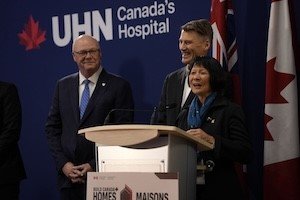
On January 26, 2026, a significant partnership between federal, provincial, and municipal governments and the University Health Network (UHN) was announced, paving the way for an innovative supportive housing project in Toronto. The second phase of the Dunn House initiative, situated in the Parkdale community, aims to deliver 54 rent-geared-to-income studio units specifically designed for at-risk seniors. This project not only addresses the pressing housing crisis but also underscores the vital link between housing stability and health outcomes.
The first phase of the Dunn House, which commenced operations in October 2024, has already established a model that offers affordable housing to some of UHN’s most medically and socially complex patients. Dr. Andrew Boozary, Executive Director of UHN’s Gattuso Centre for Social Medicine, emphasizes the critical need for such initiatives, highlighting that homelessness significantly shortens life expectancy—by 30 to 40 years, according to decades of research. This stark reality positions housing as an essential component of health, further justifying the development of supportive environments tailored for vulnerable populations.
To facilitate the expedited construction of this supportive housing, CreateTO has been tasked with overseeing the project on behalf of the City of Toronto. The decision to employ modular construction techniques is especially noteworthy, aimed at reducing costs and accelerating delivery timelines. Such methodologies are increasingly recognized in the construction industry for their efficiency and ability to address urgent housing needs more rapidly, a crucial factor in meeting the demands of at-risk communities.
Financial backing for the $34.2 million project is robust, with contributions amounting to $21.6 million from the federal government via Build Canada Homes, alongside $2.6 million from Ontario and $10 million from the City of Toronto. This multi-tier funding approach highlights the collaborative effort required to tackle complex social issues such as supportive housing.
Ana Bailão, CEO of Build Canada Homes, articulated the project’s vision and impact, stating that Phase 2’s development exemplifies the potential outcomes of coordinated efforts among government bodies, healthcare institutions, and nonprofit organizations. The collaborative framework established for this initiative serves as a model for future housing projects, reinforcing the hypothesis that a unified approach can create housing solutions that far exceed the sum of their individual parts.
Ultimately, the Dunn House Phase 2 serves not just as a construction project but as a beacon of hope for the integration of housing and healthcare, drawing a direct correlation between stable living conditions and improved health, thereby addressing urgent social determinants of health effectively. This initiative stands as a progressive example of how targeted interventions can create meaningful change within communities, particularly for those facing the most significant challenges.
📋 Article Summary
- The federal, provincial, and municipal governments, alongside the University Health Network, are launching a supportive housing project in Toronto’s Parkdale community, offering 54 rent-geared-to-income studio units for at-risk seniors.
- The project builds on the success of the first phase of Dunn House, which opened in October 2024, providing affordable housing for medically and socially complex patients.
- Funding totals $34.2 million, sourced from federal, provincial, and municipal contributions, highlighting a collaborative effort in addressing homelessness and health.
- The initiative emphasizes that stable housing is essential for good health, integrating supports to tackle social determinants such as food security and healthcare access.
🏗️ Impact for Construction Professionals
The announcement of a new supportive housing project in Toronto represents a significant opportunity for construction companies, project managers, and contractors. With $34.2 million in funding and a focus on modular construction, professionals in the industry should align their services to meet the demand for efficient, economical building solutions.
Practical business implications: This project reinforces the need for affordable housing solutions, indicating an upward trend in similar projects. Firms should evaluate their capacities for modular construction, as this method can reduce costs and enhance project timelines.
Potential opportunities: This is an excellent chance to partner with government entities and healthcare institutions, creating competitive advantages in bidding for future projects. Companies should also consider supply chain efficiencies for modular construction materials.
Challenges: Navigating potential regulatory requirements and deadlines could be daunting. Staying informed and adaptable will be key.
Actionable insights: Assess your workforce’s skills in modular building and invest in training. Build relationships with local governments and stakeholders to position your business favorably for upcoming projects.
Ultimately, this initiative should prompt a reevaluation of strategic planning, emphasizing community-oriented housing solutions that align with evolving funding opportunities and societal needs.
#Dunn #House #phase #project #government #funding #boost

