
Claims of Government Constructing Fake Homes for Photo Opportunity are Misleading – Winnipeg Free Press
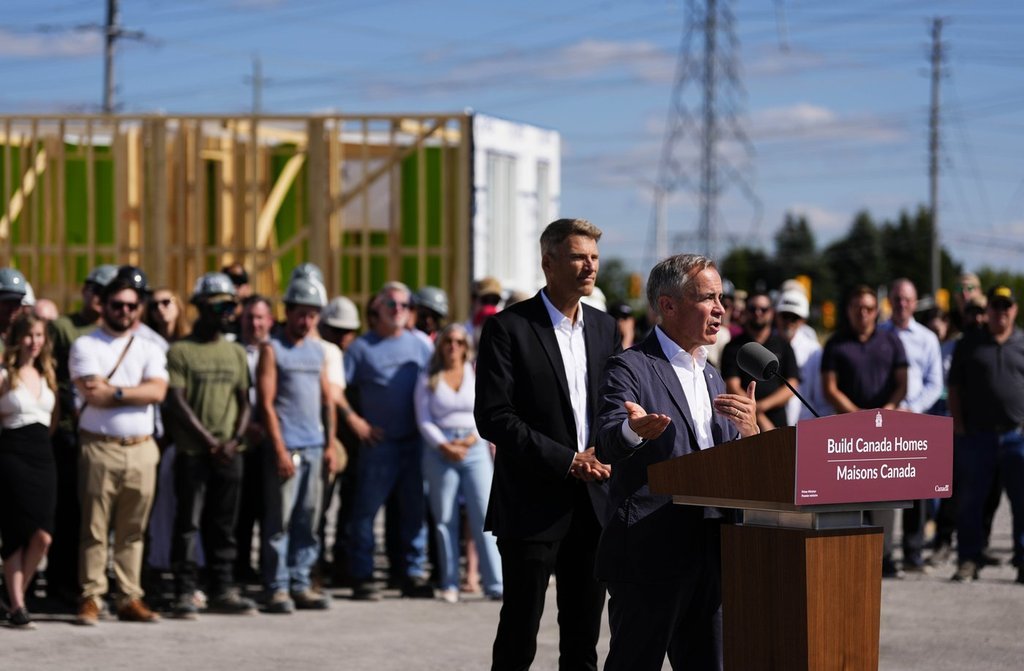
In September, the Canadian government announced the establishment of the Build Canada Homes agency, aimed at addressing the critical housing shortage across the nation. The initiative, championed by Prime Minister Mark Carney, was met with skepticism on social media, with claims suggesting the backdrop of the announcement featured a fabricated construction site complete with “fake homes.” However, subsequent clarifications from the builder, Caivan Homes, affirmed the modular homes presented were legitimate prototypes, though they were not intended as a permanent housing solution.
The initial budget of $13 billion set forth by Build Canada Homes is earmarked for the construction of 4,000 homes across six federally owned sites. While social media critics claimed that this budget implied a cost of over $3 million per unit, this interpretation is misleading. The total funding encompasses a range of programs beyond the homes themselves, including a $1.5 billion rental protection fund and $1 billion dedicated to supportive housing initiatives for the homeless. These funds will facilitate partnerships with provincial, municipal, territorial, and Indigenous governments to ensure comprehensive support systems, including employment and healthcare provisions.
During the press conference, Carney highlighted the innovative manufacturing potential of modular homes. He indicated that the homes displayed were not fully finished and clarified that their assembly process was intentionally slowed to illustrate how the modular system operates effectively. The homes are built off-site in a factory setting, and the sections are then transported and assembled at their final locations, showcasing the efficiency and adaptability of modular construction in contemporary housing developments.
The CEO of Caivan Homes, Frank Cairo, emphasized that the announcement should not be misconstrued as signaling a large-scale permanent development. Instead, it was a demonstration of prototype builds in synergy with their existing construction processes. The homes will eventually be relocated, one traveling to a family in Nunavut and others being reassembled elsewhere in Ottawa, reinforcing the transient nature of these prototype installations.
In conclusion, while initial reactions to the Build Canada Homes announcement raised questions about authenticity and cost, a deeper investigation reveals a strategic approach by the government in tackling Canada’s housing crisis. By leveraging modular construction methods and allocating a significant budget across various initiatives, the agency aims to create sustainable housing solutions that accommodate diverse community needs. The implications of this development could lead to more innovative and efficient housing strategies in an industry often criticized for its slow pace in addressing urgent demographic shifts and housing demands.
📋 Article Summary
- The Build Canada Homes agency was announced with a $13 billion budget to develop 4,000 housing units across six federally owned sites.
- Social media claims suggested the construction site featured fake homes, but the builder clarified these were real prototype builds not meant for permanent installation.
- The $13 billion budget does not solely fund the homes; it also supports various programs, including a $1.5 billion rental protection fund and $1 billion for supportive housing initiatives.
- Prime Minister Mark Carney emphasized the rapid construction capabilities of modular homes during the announcement, indicating the prototype nature of the displayed units.
🏗️ Impact for Construction Professionals
The announcement of the federal government’s Build Canada Homes agency presents significant opportunities and challenges for construction professionals. First, with a $13 billion budget aimed at increasing housing availability, construction companies can tap into new projects, especially those focused on modular homes and affordable housing. This could mean increased demand for services and collaboration with agencies working on supportive housing and rental protection programs.
Professionals should consider diversifying their portfolios to include modular construction expertise, as the government’s emphasis on this technology could streamline building processes and reduce costs. Establishing partnerships with the agency or other contractors involved in the initiative can provide access to valuable contracts.
However, professionals must remain agile, adapting to potential shifts in demand and regulatory requirements. Keeping informed about the budget allocations—like the $1.5 billion rental protection fund—can help firms position themselves for upcoming opportunities in supportive housing projects.
Strategically, firms should assess their capabilities in modular construction and explore relevant training for staff. Integrating this knowledge into their day-to-day operations could enhance profitability and long-term growth in an evolving market.
#Claims #government #built #fake #homes #photo #misleading #Winnipeg #Free #Press

