
⭐ Our BuildCanadaHomes.org Analysis:
Takeaway
The City of Edmonton has initiated a significant affordable housing project, with plans to construct approximately 1,300 new homes on ten surplus school sites, supported by a combined federal and provincial funding commitment of $200 million. Edmonton’s Mayor Andrew Knack emphasized the urgency of addressing housing affordability, as a substantial portion of the population, specifically one in four renter households, face core housing challenges. The initiative aligns with the Affordable Housing Partnership Program established in 2022, which aims to fast-track the development of affordable units, facilitating better living conditions for vulnerable groups, including Indigenous renters.
For the Greater Toronto Area (GTA) and Ontario’s broader real estate market, this development signals a multifaceted shift towards prioritizing affordable housing amid soaring market prices. Home builders and developers are encouraged to adapt to this emerging trend, leveraging similar government incentives to create more robust, affordable housing solutions. One actionable takeaway for construction industry stakeholders is to explore partnerships with local governments to tap into potential funding initiatives, similar to Edmonton’s models, which may also open doors for community development. This approach is vital for Ontario’s construction business owners as it not only mitigates the risk of project delays due to market fluctuations but also aligns with societal needs—reflecting a holistic commitment to community development in a time where housing affordability is critical.

Listen to this article
Estimated 4 minutes
The audio version of this article is generated by text-to-speech, a technology based on artificial intelligence.
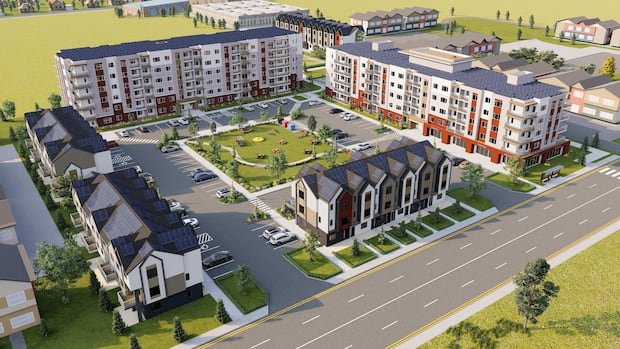
The City of Edmonton announced Monday it has found affordable housing providers to build about 1,300 new homes on 10 former surplus school sites.
“The impacts are going to be many more affordable homes for Edmontonians who have been struggling with affordability,” Mayor Andrew Knack said while making the announcement at city hall.
Assisted Living and Social Services Minister Jason Nixon also announced that the province and federal government would be chipping in $200 million to build thousands more affordable homes across the province.
The funding is part of the Affordable Housing Partnership Program which was launched by the provincial government in 2022.
“There’s a lot of great projects out there. They may not get built for a year or so, and that’s fine. We’ll fund them in a year,” said Nixon.
“What our main goal right now is making sure that the dollars that come out now are actually building new units that have people in homes by the end of next year.”

The city said it found one in eight Edmontonians who own a home, one in four renter households and one in three Indigenous renter households struggle with core housing needs.
The city said this means these residents pay too much for housing or live in crowded or unsafe conditions and can’t afford to move.
About 70 per cent of the housing, or 925 units, will be on the affordable housing spectrum, the city said.
The affordable housing spectrum that the city uses ranges from supportive housing, community or social housing and below-market rental or ownership.
Housing will be developed within the footprint originally intended for a school, leaving adjacent green space open.
The 10 sites were initially reserved for schools for neighbourhoods built between the 1970s and 1990s.
The sites were returned to the city in 2009 when they were no longer required by local school boards.
In 2015, city council designated them for affordable housing.

The selected developers for surplus school sites are:
Another surplus school site in Wedgewood Heights is currently being reviewed for use, Knack said.
To receive land or grant funding support from the city, affordable housing providers must provide housing at reduced rental rates as set out by the city’s maximum allowable rental rates, which caps rent at 80 per cent of average market rates based on the CMHC’s annual market rental reports.
“We’re very pleased and honoured and look forward to working with the city and the province, and, of course, the federal government, on creating a home fire for our members in the urban city here,” Confederation of Treaty 6 First Nations Grand Chief Greg Desjarlais said.
Leslie Allen, CEO with Win House, said the not-for-profit organization will build 64 units to help women, non-binary people, and children escape dangerous situations.
This will include one-, two- and three-bedroom housing.
“Some of the stress that we have right now in our emergency shelters [is], because there isn’t affordable housing for women to move into, we’re going to be able to move women into the new place in a much quicker fashion,” she said.
The city has been able to direct resources toward developing the sites for housing through the federal government’s Housing Accelerator Fund (HAF).
The city was initially awarded $175 million to work on its HAF action plan between 2024 and 2026.
On March 22, 2025, the Canada Mortgage and Housing Corporation announced that Edmonton would receive an additional $17 million for two new housing projects, bringing the city’s total allocation to $192 million.
New homes incentivized through the HAF action plan will be a mix of multi-unit housing, transit-oriented, missing middle and non-market affordable housing, the city said.
Source: Read the original article at City of Edmonton finds affordable housing providers to develop former surplus school sites on www.cbc.ca

