
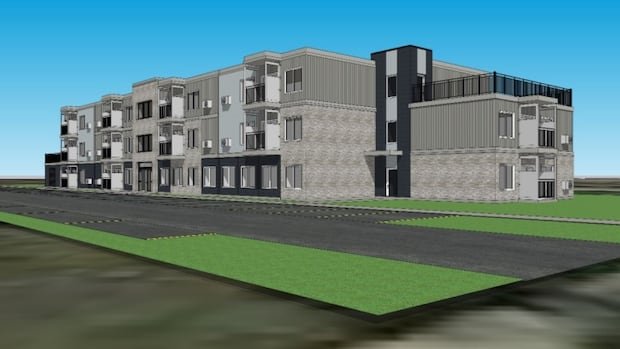
Chatham-Kent and Lambton Officials Urge Flexible Federal Housing Funding Following Setbacks in Modular Projects
Modular Construction Challenges in Chatham-Kent and Lambton County: Key Developments and Future Directions
Recent developments in Canada’s housing landscape highlight significant challenges and lessons learned from modular construction initiatives in Chatham-Kent and Lambton County. Officials from both municipalities are advocating for more flexible federal funding programs following project setbacks that resulted in ballooning costs and contractor disputes. The move towards modular construction was initially perceived as a pathway to qualify for federal grants, particularly under the Rapid Housing Initiative, designed to expedite the provision of affordable housing.
Both Chatham-Kent and Lambton County pursued modular projects to enhance housing accessibility, but encountered significant hurdles. The Municipality of Chatham-Kent approved an additional $9.2 million to finalize a 27-unit affordable housing complex due to contractor delays. Similarly, Lambton County found itself facing a $1.7 million liability and $4.2 million in cost overruns on its own modular project. Ray Harper, Chatham-Kent’s director of municipal housing, emphasized the proprietary nature of modular units, complicating recovery when projects falter.
As municipalities grapple with financial repercussions, the recent announcement by the federal government to establish a new housing agency reinforces the need for modern methods of construction, including modular and mass timber solutions. Built Canada Homes aims to introduce flexible financial incentives alongside multi-faceted construction strategies aimed at facilitating large-scale projects. This governmental pivot reflects a broader recognition of the complexities and risks associated with tightly prescribed funding pathways that may inadvertently pressure municipalities into specific construction modalities.
Voices from both Chatham-Kent and Lambton advocate for autonomy in project selection based on value rather than rigid compliance with funding stipulations. Melisa Johnson, manager of housing services for Lambton County, underscored the intrinsic risks of funding programs that dictate construction methods, expressing concern that a simplified approach may inadvertently legitimize subpar contractors who might exploit program funding.
Looking towards the future, industry stakeholders note that the modular construction sector has matured since the initial projects in 2021, potentially improving the reliability of contractors. However, as the federal government prepares to unveil more information about Build Canada Homes, ongoing dialogue regarding the balance between innovation and risk management remains critical. Enhanced transparency and collaboration between municipal entities and federal agencies could pave the way for more successful housing initiatives, ultimately reducing barriers to affordable housing access.
📋 Article Summary
- Officials in Chatham-Kent and Lambton County are advocating for more flexible federal funding programs for housing construction following significant cost overruns with modular projects.
- Delays and complications with contractors resulted in additional expenses, leading Chatham-Kent to approve over $9 million for a housing project and Lambton County facing a $1.7 million deficit.
- Both municipalities emphasize the importance of not forcing specific construction types, as it can hinder value for money and project feasibility.
- The new federal housing agency, Build Canada Homes, aims to promote cost-efficient construction methods and will provide flexible financial incentives without mandating specific building types.
🏗️ Impact for Construction Professionals
The announcement of the new Build Canada Homes initiative offers significant opportunities for construction professionals, particularly in modular and factory-built housing. As a contractor or project manager, consider the following actionable insights:
-
Adapt to Modern Methods: Emphasize your capabilities in modular and mass timber construction—highlighting expertise could give your firm a competitive edge as demand increases.
-
Engage with Federal Programs: Stay informed about funding opportunities and flexible incentives included in Build Canada Homes. Develop relationships with municipal officials to understand their needs and align your services accordingly.
-
Risk Assessment and Management: Given past challenges, assess your risk management strategies concerning modular construction. Consider partnering with reliable subcontractors who can manage specific requirements efficiently.
-
Prepare for Bulk Procurement: As the initiative may lead to bulk projects, prepare your company for larger contracts. Streamline operations to increase capacity and improve efficiency.
- Innovation Focus: Stay updated on innovations in construction technology and sustainable methods. Being adaptable will help in adjusting to evolving market demands and potential regulatory changes.
Overall, aligning your business strategy with federal initiatives will position you favorably in a potentially lucrative market shift.
#ChathamKent #Lambton #officials #call #flexible #federal #housing #funding #modular #projects #south

