
Carney’s First Budget Proposes Billions in New Spending to Support Economy Affected by Tariffs
Overview of Canada’s Federal Budget: Implications for the Construction Industry
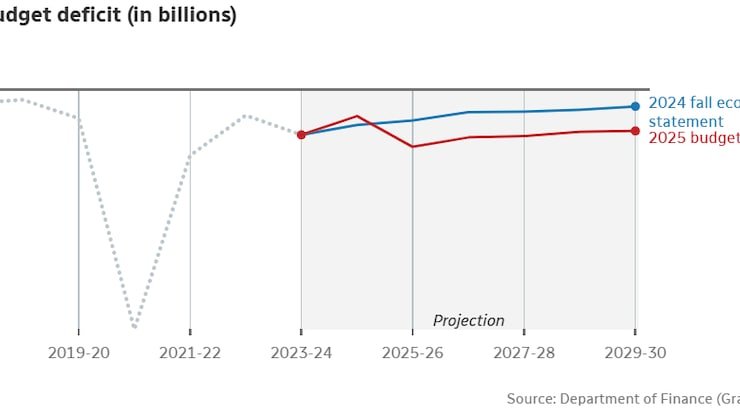
On Tuesday, Finance Minister François-Philippe Champagne unveiled a federal budget expected to have profound implications on Canada’s economic landscape, particularly within the construction sector. With a projected deficit of around $78 billion for the fiscal year 2025-26, this budget aims to support an economy facing significant disruptions, while also introducing substantial cuts to public service expenditures.
The government has earmarked approximately $141 billion for new spending over the next five years, which will be partially counterbalanced by $51.2 billion in budget cuts and savings. One of the standout components of this budget is the initiation of a $51 billion infrastructure program, dubbed the "Build Communities Strong Fund." This initiative is designed to catalyze the construction of vital projects such as roads, ports, hospitals, and community centers. As Canada aims to bolster its industrial base, the budget outlines specific major projects likely to benefit from expedited federal approvals, such as high-speed rail and carbon capture technologies.
To further stimulate business development, the government is proposing a productivity super-deduction. This initiative enables businesses to write off a higher percentage of capital investments, thereby incentivizing investments in machinery and technology. This move could substantially enhance Canada’s competitive standing against the United States, especially in light of recent tax reforms south of the border.
However, the budget also indicates a strategic pivot regarding immigration policy, with temporary foreign worker admissions set to be cut by nearly 50%. This shift could introduce challenges for construction firms already grappling with labor shortages, as the influx of skilled temporary foreign labor has been crucial in meeting increasing industry demands.
Moreover, the planned reduction of approximately 40,000 public sector jobs through attrition and buyouts raises questions about the potential impact on project approvals and bureaucratic efficiency moving forward. Coupled with the anticipated rise in debt-servicing costs, which are projected to reach $55.6 billion, the fiscal strategy reflects an urgent need to balance economic recovery initiatives with prudent financial management.
In conclusion, while Canada’s federal budget demonstrates bold plans for infrastructure investment and business incentives, the implications for the construction industry are complex. The dual approach of promoting extensive public investment while implementing cuts in immigration and public service roles highlights a critical balancing act that the government must navigate. Building a resilient construction sector will require not only effective execution of these initiatives but also a responsive strategy to labor market shifts within the evolving economic framework.
📋 Article Summary
- The federal budget introduces $141 billion in new spending over the next five years, offset by $51.2 billion in public service cuts and savings, with a projected deficit of $78 billion for 2025-26.
- Economic growth is forecasted at about 1% per year for the next two years amidst rising unemployment, business uncertainty, and weak productivity.
- Major initiatives include a $51 billion infrastructure program, an $81 billion funding package for the military, and cuts to immigration and the public service as part of a strategy to bolster economic self-sufficiency.
- The government aims to stimulate investment through tax incentives, particularly focusing on the critical minerals sector and a new AI fund, while also reducing planned social program spending.
🏗️ Impact for Construction Professionals
The recent federal budget announcement presents critical opportunities for construction company owners, project managers, and contractors. With a projected $51 billion infrastructure investment and plans for significant construction projects like high-speed rail and expanded ports, now is the time to align your business strategies with these developments.
Actionable Insights:
-
Engage with Government: Monitor bid opportunities for federal contracts. Register with procurement portals to stay informed about upcoming projects.
-
Assess Capacity: Evaluate your current workforce and resources. Prepare to ramp up operations quickly as projects are greenlit, particularly in areas like road, hospital, and housing construction.
-
Diversify Offerings: Consider expanding into sectors highlighted in the budget, such as military infrastructure or renewable energy projects, to tap into new revenue streams.
- Optimize Operations: With a projected downsize in public service and potential bureaucratic efficiencies, streamline your processes to enhance competitiveness.
Potential Challenges:
Be wary of rising labor costs and material prices as demand surges, and plan accordingly in your bids and resource allocation.
By proactively addressing these implications, you can position your firm to capitalize on emerging opportunities and navigate potential challenges effectively.
#Carneys #1st #budget #calls #billions #spending #prop #tariffhit #economy

