
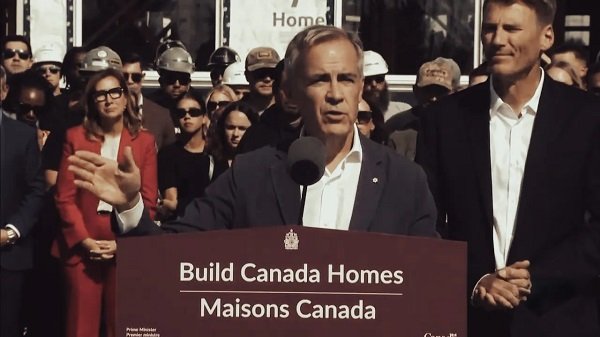
Carney Budget Persists with Flawed ‘Build Canada Homes’ Strategy
The recent budget introduced by the Carney government has significant implications for Canada’s construction and energy sectors, reflecting continued investment in a “green economy” while maintaining stringent regulations on fossil fuels. The budget outlines substantial funding for initiatives aimed at promoting renewable energy and reducing greenhouse gas emissions, reaffirming Canada’s commitment to environmental sustainability despite previous criticisms of such policies.
Central to the budget’s provisions is an increase in funding for alternative energy technologies, including speculative nuclear power and enhanced electrical transmission systems to support green energy production. The government plans to maintain or potentially increase existing carbon taxes on industrial emitters, a measure that seeks to further restrict carbon footprints within the construction and energy industries. Additionally, the budget reflects a continuation of significant regulations that aim to limit oil, gas, and coal development—industries that have historically been integral to the Canadian economy.
Despite this investment in green initiatives, the economic outcomes have been underwhelming. Between 2014 and 2023, the contribution of the green sector to Canada’s overall GDP improved only marginally—from 3.1% to 3.6%—while the creation of new jobs in this sector has been limited, amounting to just 68,000 positions over the same period. This situation raises concerns among construction professionals about the viability of relying on green energy technologies to drive job growth and economic stability.
Industry experts point to the persistent regulatory burden on fossil fuel projects, which has hampered production and investment. Policies introduced under prior administrations, like the cap on greenhouse gas emissions and restrictions on pipeline projects, remain intact, putting additional strain on the natural resources sector. This regulatory environment, combined with substantial financial outlays for green projects, may continue to stifle economic growth, leading to stagnation in construction and related fields.
As the Carney government advances its green agenda, construction professionals must navigate the dual pressures of regulatory compliance and market shifts toward renewable infrastructure. The focus on a green economic transition, complemented by heavy state intervention, raises critical questions about the future of traditional energy sources and their role in Canada’s economy. The construction sector will need to adapt swiftly to these changes, balancing sustainability goals with economic realities to ensure continued growth and stability.
In conclusion, the Carney budget signals a robust commitment to green energy initiatives, yet the accompanying regulatory constraints on fossil fuels may hinder economic revitalization, posing challenges for construction stakeholders invested in both sectors.
📋 Article Summary
- The Carney government’s first budget heavily invests in a "green economy" while maintaining stringent regulations on fossil fuel production despite poor economic outcomes from past policies.
- New spending initiatives include support for nuclear power, renewable energy, and tax credits for alternative fuels, contributing to a 38-fold increase in federal spending on green initiatives from 2014 to 2025.
- Despite the significant financial investment, the green sector’s contribution to Canada’s economy has barely grown, with only 68,000 new jobs added over nine years, representing just 2% of total employment.
- The budget is perceived as a continuation of past Trudeau-era policies, potentially exacerbating Canada’s economic stagnation without addressing previous failures.
🏗️ Impact for Construction Professionals
The recent budget announced by the Carney government emphasizes significant spending in the green economy, which presents both opportunities and challenges for construction professionals. Owners, project managers, and contractors should assess new avenues for engaging in green initiatives, such as renewable energy projects and energy-efficient building retrofits, as federal investments could create demand for eco-friendly construction practices.
However, the heightened regulations on fossil fuels and GHG emissions may pose limitations on traditional construction methods and materials. It’s crucial for professionals to familiarize themselves with these new regulations to adapt their strategies accordingly. Understanding and integrating sustainable practices will not only align with government objectives but also meet the rising client demand for green solutions.
To capitalize on these trends, construction firms should invest in training for sustainable construction methodologies and technologies. Engaging with local governments about upcoming green projects can also secure more contracts. Strategically planning your pricing to account for potential increased costs from compliance with regulations will ensure competitiveness. Ultimately, staying informed and proactive will position your firm for success in a rapidly evolving market.
#Carney #budget #continues #misguided #Build #Canada #Homes #approach

