
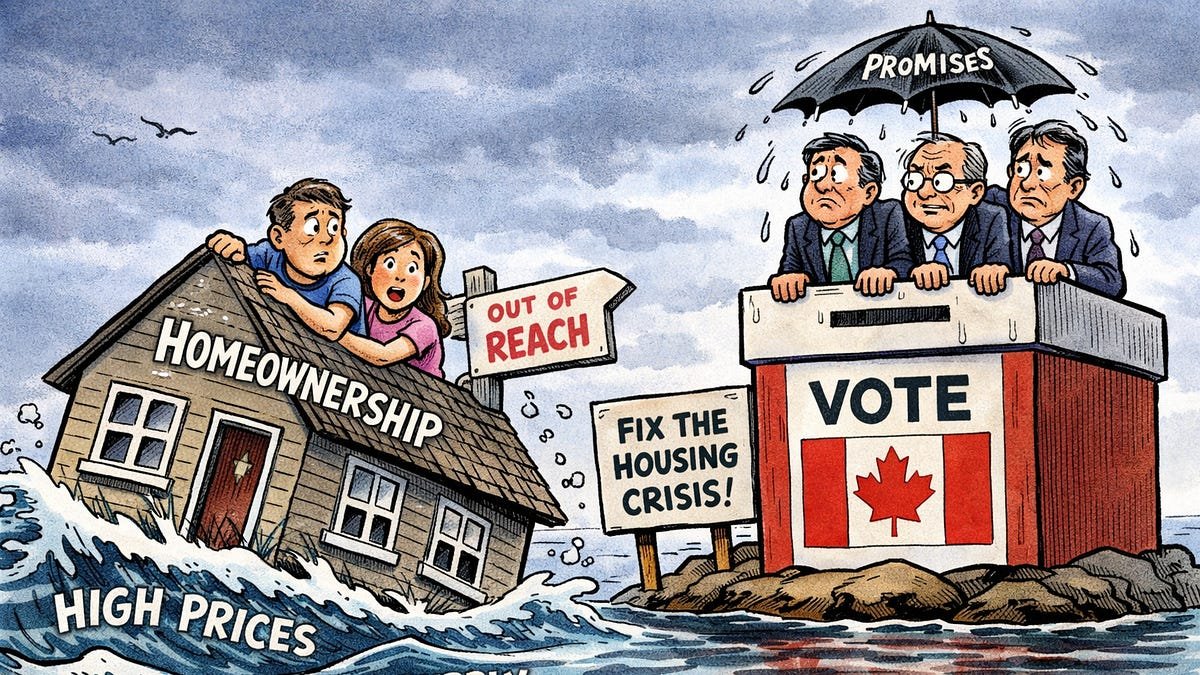
Canadians Still Aspire to Homeownership, but Doubts About Its Feasibility Grow
The recent national survey conducted by Abacus Data in partnership with the Canadian Home Builders’ Association (CHBA) reveals striking insights into the ongoing housing crisis in Canada, elucidating not merely a policy challenge but a deepening political identity dilemma. The data indicate a pervasive desire for homeownership, with 70% of non-homeowners aspiring to buy a home in the future. Intriguingly, this longing remains particularly strong among younger demographics, with 89% of those aged 18-29 expressing the same ambition.
However, a stark contrast emerges as the survey uncovers a troubling sentiment: only 29% of non-homeowners believe they will realistically achieve homeownership. This sentiment of uncertainty breeds a profound crisis beyond mere affordability—it’s a crisis of credibility in the housing system. For young Canadians, the sense of possibility is even murkier, where 42% hover between hope and resignation regarding their future homeownership prospects.
The implications of this emotional landscape are significant. The survey underscores that 83% of Canadians are concerned about housing affordability, with a pronounced 93% among younger citizens. Moreover, an overwhelming 86% agree that this crisis transcends the lower-income brackets, affecting a wide swath of middle-income earners. This marks a pivotal shift: housing challenges have transitioned from being niche issues to mainstream societal concerns, with the very fabric of middle-class life at stake.
Canadians largely attribute the housing shortage to insufficient construction, with 74% recognizing the dire need for an increase in housing supply across all sectors. The survey reflects growing dissatisfaction with government responses, with satisfaction ratings hovering around a bleak 20% across various levels of governance. Notably, the federal government is perceived as bearing the brunt of responsibility, with two-thirds of respondents believing it should spearhead solutions to the housing affordability crisis.
As the political discourse evolves, Canadians express urgent needs for immediate affordability solutions rather than merely expanding social housing initiatives. Key proposals gaining traction include reforms such as expanding GST relief on new homes and revising development charges.
Ultimately, the ramifications of this survey extend beyond housing policy—they touch the realm of trust in government institutions. As Canadians bear the psychological weight of feeling disenfranchised, there emerges a palpable demand for political alternatives promising impactful change. This rising sentiment among a generation of voters may foreshadow a profound transformation in political landscape and priorities, pressing for a housing market that caters to the aspirations of everyday Canadians.
📋 Article Summary
- Canadians still deeply value homeownership, with 70% of non-homeowners aspiring to buy a home, despite rising skepticism about achieving this goal.
- Only 29% of non-homeowners feel confident in their ability to purchase a home, highlighting a significant discontent with the current housing market.
- The housing crisis has transitioned from a minor concern to a central issue affecting middle-class aspirations, influencing trust in institutions and political sentiment.
- A majority view insufficient housing supply as a primary problem and expect the federal government to take decisive action to address affordability and unlock housing access.
🏗️ Impact for Construction Professionals
The current housing crisis in Canada presents both challenges and opportunities for construction professionals. With 74% of Canadians believing that insufficient homes are being built, there’s a clear call for increased construction efforts. Owners and project managers should prioritize scalable residential projects, focusing on affordable housing to meet market demand.
Action steps include forming partnerships with local governments for funding or incentives aimed at increasing housing supply. Consider diversifying services to include not just market housing but also non-market solutions, aligning with public support for varied housing types.
Be prepared to adapt your operations; streamline processes to minimize costs, which will be crucial as affordability concerns rise. Monitor governmental policies closely—new measures like tax relief on new constructions could impact your bottom line positively or require operational adjustments.
Finally, utilize data-driven decision-making to identify market trends and adjust your strategic planning accordingly. Addressing the housing crisis effectively can position your company as a leader in a competitive landscape, gaining both clientele and reputation.
#Canadians #home #longer

