
Canada’s Housing Supply is in Crisis: Can Robots Provide a Solution?
The construction industry in Canada is experiencing a transformative shift as innovative companies leverage automation and advanced robotics to address the pressing housing crisis. Traditional homebuilding methods, which largely rely on manual labor and on-site assembly, are increasingly being challenged by solutions designed to enhance speed, scalability, and affordability. This evolution is central to federal efforts aimed at doubling housing capacity across the nation and introducing factory-built homes as a cornerstone of housing policy.
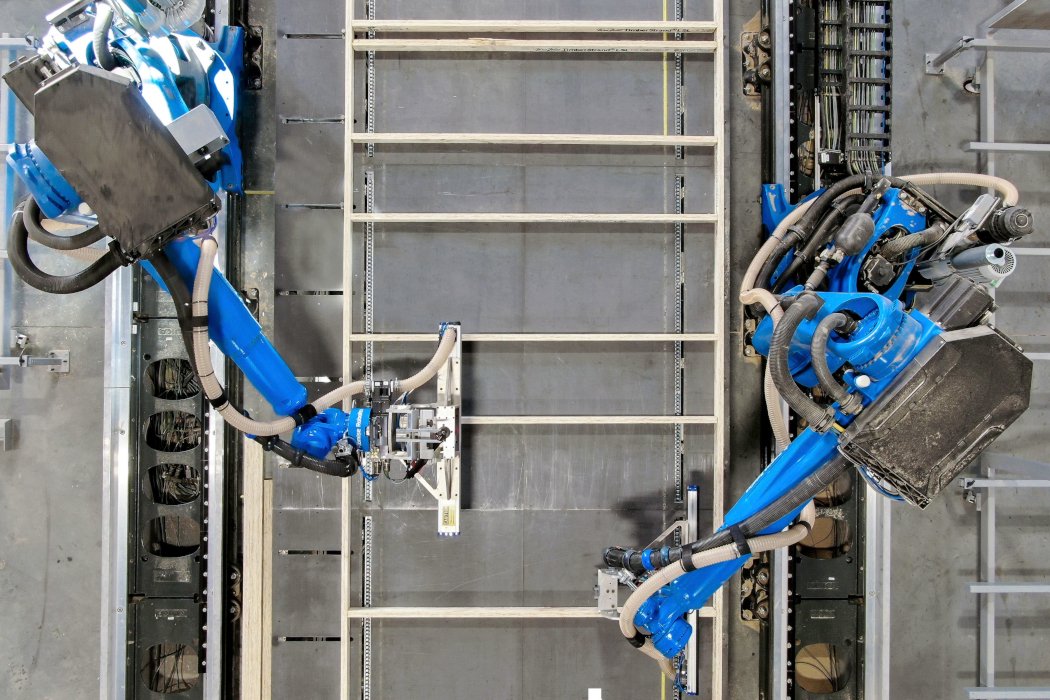
Pioneering firms like Promise Robotics and Horizon Legacy are at the forefront of this revolution. Promise Robotics, established in 2020, employs sophisticated AI-driven software to guide industrial robots through up to 300 different steps in wall construction. By integrating technology with traditional building methods, the company can accommodate a range of designs while complying with various regional building codes. The result is a system capable of producing all components for a typical two-storey home within a single day, significantly reducing labor, time, and overall costs.
However, scaling these factory-built solutions is not without challenges. Experts highlight that fragmented building codes and prolonged approval processes present bureaucratic hurdles that can delay project timelines by several months. This unpredictability not only escalates costs but also complicates the efficient management of factory operations. Mike Moffatt, a housing economist, points out that addressing these systemic issues is essential for the widespread adoption of robotics and factory-built housing.
In response to labor shortages within the construction sector, companies like Horizon Legacy are adopting innovative strategies. Their 3D printing robot, VAL, serves as a mobile factory, capable of producing concrete components on-site. This approach not only cuts costs but also aligns with sustainability goals. Furthermore, it creates a new employment pathway that requires less extensive training, potentially attracting a more diverse workforce including women and individuals with disabilities.
Despite the promising prospects of automation, the industry remains cautious. Many developers are hesitant to embrace innovations, given the significant investments at stake. However, as Canada’s housing crisis deepens—with a projected need for 4.8 million homes by 2035—there is increasing pressure on the government to serve as a primary customer for factory-built homes. This could catalyze much-needed change in construction practices.
In conclusion, while the integration of robotics and advanced technology in homebuilding heralds exciting possibilities, the industry must navigate complex regulatory environments and market fluctuations. Stakeholders are urged to collaborate actively to mitigate these challenges, ensuring that innovation effectively contributes to solving the housing crisis while maintaining economic stability.
📋 Article Summary
-
Introduction of Robotics: Canadian companies, like Promise Robotics, aim to modernize the homebuilding industry by using AI and robotics, addressing productivity and customization challenges in housing construction.
-
Government Support: The federal government is backing factory-built homes as part of its strategy to double homebuilding capacity, highlighting the need for innovative approaches to tackle the housing crisis.
-
Regulatory Challenges: Variations in building codes and lengthy approval processes pose significant barriers to scaling factory-built housing, which complicates the adoption of new technologies.
- Potential Solutions: Innovations such as Horizon Legacy’s mobile factory model and public-private partnerships are seen as ways to mitigate labor shortages while producing affordable housing effectively.
🏗️ Impact for Construction Professionals
The rise of automated homebuilding technologies presents significant implications for construction professionals. Owners and project managers should recognize the potential for increased efficiency and reduced costs through robotics and AI, which can streamline processes and minimize labor shortages. Embracing these technologies could position your business as a leader in the market, attracting government partnerships and funding opportunities aimed at addressing the housing crisis.
However, challenges such as variable building codes and lengthy approval processes may complicate implementation. Professionals must stay informed about regulatory developments and adapt strategies accordingly to navigate these hurdles.
Actionable steps include investing in training programs for your workforce to handle automation and collaborating with tech firms to integrate their solutions into your projects. Additionally, consider exploring public-private partnerships for social housing initiatives, which can enhance your project’s visibility and impact.
Incorporating these innovations into your strategic planning not only sets your firm on a path for growth but also aligns it with evolving market demands and government initiatives, ensuring resilience in an increasingly competitive landscape.
#Canadas #housing #supply #crisis #robots

