
Canada’s Housing Design Catalogue: Now Ready for Action!
The recent launch of the Canada Housing Design Catalogue marks a significant step in addressing Canada’s housing crisis, a development initiated during the waning days of the Justin Trudeau administration and rejuvenated under the new Liberal government. With detailed construction plans now available for free download, the catalogue aims to facilitate the gentle densification of urban areas, steering the focus away from greenfield developments and toward optimizing existing infrastructure.
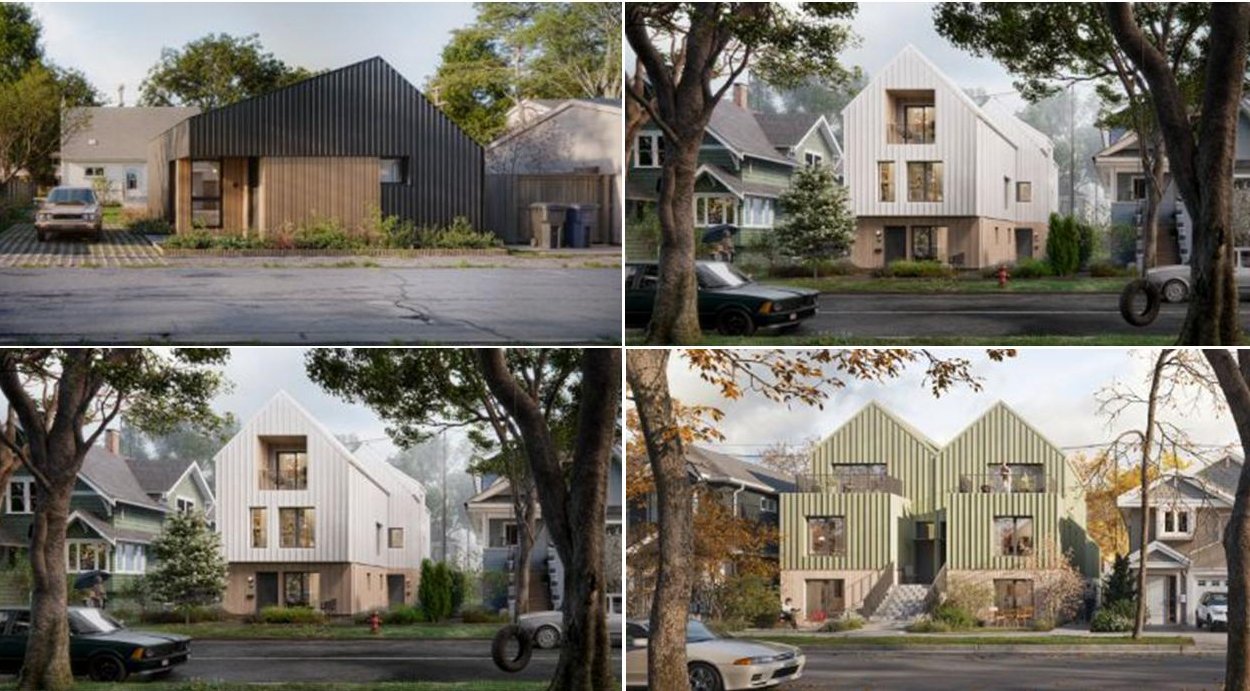
Designed to align with local and regional needs, this catalogue presents 50 standardized housing designs, including accessory dwellings, duplexes, and multi-plexes. These designs emphasize contemporary aesthetics that complement existing neighborhoods, catering to the diverse climatic conditions and building codes across different Canadian regions. The Canada Mortgage and Housing Corporation (CMHC) envisions the catalogue as a resource that streamlines the building process, thereby accelerating housing approvals and reducing bureaucratic hurdles.
Tim Louis, MP for Kitchener–Conestoga, articulated the vision behind the catalogue, stating its role in promoting the urgent need for increased housing density while addressing regional specifics. Over a dozen municipalities have already pledged their support by pre-reviewing designs, and there is optimism that more will follow suit. This collaboration aims to bolster the broader governmental initiative to double the rate of housing construction, enhancing affordability and combatting homelessness.
In tandem with the catalogue, the recently introduced $13 billion federally funded agency, Build Canada Homes, aims to stimulate the construction of affordable housing on a large scale. This initiative emphasizes prefabrication and modular construction techniques, which contrasts with the more traditional wood-frame focus of the catalogue. By prioritizing local labor and supply chains, the government anticipates that the availability of technical design packages will yield significant efficiencies in time and cost, ultimately contributing to the construction sector’s productivity.
While the catalogue provides a much-needed framework, its specifications regarding energy efficiency have generated mixed reactions. Although the designs include Building Performance Reports outlining operational energy use and carbon projections, they fall short of the rigorous PassivHaus Standards. Instead, they target a more modest NBC 2020 – Tier 3 energy performance, potentially disappointing stakeholders aiming for higher sustainability benchmarks.
As the housing industry engages with the catalogue, it remains to be seen how the sector will respond and adapt to these guidelines. Nevertheless, the initiative represents a pivotal moment in Canadian housing policy, with the potential for significant real-world impacts on construction practices, sustainability standards, and the overall housing landscape in Canada.
📋 Article Summary
- The Canada Housing Design Catalogue, initiated during Justin Trudeau’s administration, focuses on gently densifying existing urban areas with 50 standardized home designs available for free download.
- The initiative aims to streamline building processes and support local jobs, emphasizing traditional wood frame construction in response to regional climate and code variations.
- It complements broader federal efforts to double housing construction rates and improve affordability, linking to the $13 billion Build Canada Homes program.
- While the designs include energy efficiency reports, they fall short of PassivHaus Standards, targeting NBC 2020 – Tier 3 energy performance instead.
🏗️ Impact for Construction Professionals
The release of the Canada Housing Design Catalogue presents significant opportunities for construction professionals. First, these standardized designs streamline the approval process, potentially reducing time and costs associated with project initiation. As municipalities commit to pre-reviewing the designs, project managers can expect faster turnarounds for permits, allowing them to take on more projects and improve cash flow.
However, companies should prepare for challenges related to meeting the specified energy performance targets, which, while ambitious, do not align fully with PassivHaus Standards. This may require additional investments in training and technology for energy efficiency.
To capitalize on this, construction firms should adopt the following actionable strategies:
- Familiarize with the Catalogue: Integrate the designs into your offerings to meet client demand for gentle densification.
- Enhance Skills: Invest in training for staff on the energy performance requirements and building methodologies detailed in the Catalogue.
- Adjust Marketing Strategies: Promote the benefits of using standardized designs in terms of efficiency, cost savings, and faster project delivery.
Ultimately, aligning operations with these new standards could position firms favorably in a shifting housing market.
#Canadas #Housing #Design #Catalogue #locked #loaded #ready #build

