
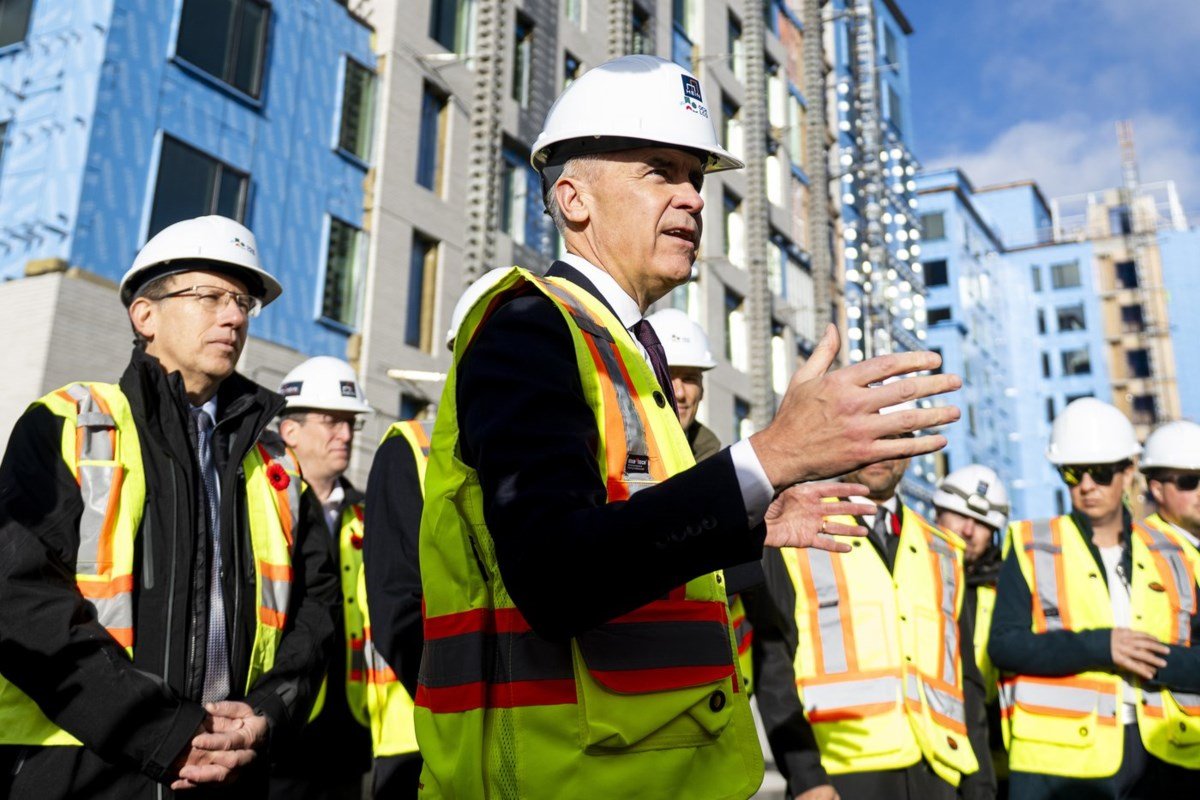
Budget Office Anticipates Modest Increase in Housing Supply from Build Canada Homes
Overview of Canada’s Housing Initiative and Its Challenges
Recently, Canadian Housing Minister Gregor Robertson addressed the challenges facing the government’s newly launched initiative, Build Canada Homes, in light of a report from the Parliamentary Budget Office (PBO). The initiative, which began in September, aims to tackle the growing housing crisis by introducing an estimated $13 billion for loans, financing, and land acquisitions geared toward increasing the affordable housing stock.
According to the PBO’s report, Build Canada Homes is projected to facilitate the construction of approximately 26,000 housing units over the next five years, with half of these designated as affordable options for low-income Canadians. While this represents a 2.1% increase over existing baseline projections for new constructions, it accounts for merely 3.7% of the approximately 690,000 units needed over the next decade to restore housing affordability. This gap raises significant concerns regarding the efficacy of current measures in addressing the escalating housing demand.
Minister Robertson indicated that the government’s approach is still in its nascent stages, suggesting that the PBO’s figures may not adequately incorporate additional funding sources, such as the $51 billion local infrastructure fund. He emphasized the government’s commitment to scaling the initiative and fostering collaboration with provincial governments and the private sector to enhance housing activity. However, critics, including Conservative Leader Pierre Poilievre, argue that the framework is inadequate, labeling it a “bait and switch” on housing promises, especially in light of the government’s goal to double housing construction.
Further complicating the landscape, the PBO raised concerns about significant declines in federal housing spending—projected to fall by 56% over the next three years—unless previous commitments to existing programs are renewed. This decline casts a shadow on the effectiveness of Build Canada Homes, as it may only partially replace funds from expiring programs like the $4.4 billion housing accelerator fund under the national housing strategy.
Moreover, interim PBO Jason Jacques expressed that a lack of clear communication regarding which programs might face cuts could result in reduced federal involvement in housing. Finance Minister François-Philippe Champagne defended the budgetary process and the historical funding levels for housing initiatives, suggesting a need for nuanced interpretations of fiscal commitments.
In conclusion, while Build Canada Homes represents a step toward addressing the housing crisis, the limitations highlighted by the PBO create a complex landscape for construction professionals and stakeholders. The industry’s success will hinge on clear strategic planning, effective funding allocation, and sustained collaboration among various governmental and private entities to ensure that the housing needs of Canadians are comprehensively addressed.
📋 Article Summary
- The new federal housing agency, Build Canada Homes, aims to increase affordable housing with $13 billion in funding but is projected to only contribute 26,000 units over five years, primarily targeting low-income Canadians.
- According to the parliamentary budget office, this represents just 3.7% of the estimated 690,000 units needed over the next decade to restore housing affordability.
- Housing Minister Gregor Robertson expects the agency’s impact will grow, potentially enhanced by additional federal infrastructure funding, despite criticisms from the opposition regarding insufficient housing construction.
- Concerns were raised about the anticipated decline in overall federal housing spending by 56% over the next three years without renewed commitments to current programs.
🏗️ Impact for Construction Professionals
The announcement regarding the Build Canada Homes initiative presents both opportunities and challenges for construction professionals. With a projected addition of 26,000 housing units over five years, there’s potential for increased demand for construction services. Owners and project managers should analyze the specifics of this initiative to position their companies to bid on upcoming projects, particularly affordable housing developments.
However, the report highlights that the expected contribution falls significantly short of what is needed to address the housing crisis—690,000 units over the next decade. This suggests a competitive market, where securing contracts may become more challenging.
Actionable insights include:
-
Networking: Foster relationships with government agencies and stakeholders involved in the initiative to stay informed about upcoming projects.
-
Diversification: Consider diversifying offerings to include sustainable building practices, which may align with government goals.
-
Strategic Planning: Refine your project management processes to increase efficiency, positioning your company as a top-choice contractor for new contracts.
- Stay Vigilant: Monitor the evolving budget and policy landscape to adapt your business strategy accordingly, ensuring you are prepared for shifts in funding and project scopes.
Ultimately, proactive engagement with this initiative can yield significant benefits in the coming years.
#Budget #office #sees #modest #boost #housing #supply #Build #Canada #Homes

