
⭐ Our BuildCanadaHomes.org Analysis:
Takeaway
The article highlights pressing discontent among housing stakeholders regarding Prime Minister Mark Carney’s recent budget, particularly its perceived inadequacies in addressing the housing crisis in Canada. Multiple organizations, including the Large Urban Centre Alliance and the Canadian Home Builders’ Association, have raised alarms about the budget’s failure to support substantial job creation and comprehensive housing solutions, pointing out that while it promises initiatives like the elimination of GST for first-time buyers, the applicability is limited and falls short of addressing the larger systemic issues, such as rising development charges and decreased new home sales.
For home builders and developers in Ontario’s Greater Toronto Area (GTA), the implications of this budget are multifaceted. In the short term, the limitations on GST relief could further dampen demand, exacerbating the ongoing sales decline. In the long run, the retreat from commitments to significantly reduce development charges could stymie new projects, diminishing job opportunities in the skilled trades that support them. An actionable takeaway for Ontario’s construction industry is the urgent need for stakeholders to advocate for a more comprehensive approach to housing policy that not only includes favorable tax measures for first-time buyers but also systematically addresses broader market pressures. This matters significantly as construction business owners in Ontario may face a shrinking market and increased competition for the remaining viability in housing supply, potentially leading to a prolonged downturn if strategic adjustments are not made promptly.
Several housing industry stakeholders are citing grave concerns with aspects of Prime Minister Mark Carney’s first budget, saying it doesn’t go far enough for the struggling sector.
The Large Urban Centre Alliance, co-facilitated by the Building Industry and Land Development Association (BILD), stated “what was once a promise to deliver 500,000 new homes annually has now become a plan that will cost 100,000 jobs. Canadians are now facing the prospect of a worsening crisis that will impact housing supply, employment, economic activity, and ultimately, middle-class families.”
David Wilkes, president and CEO of BILD, said the budget is providing false reassurances that the nation’s housing situation is “prospering” with affordability improving.
“The latest figures show that new home sales have evaporated across all housing types in every major city across Canada,” said Wilkes. “(The) budget missed an opportunity to address the historic downturn that the housing industry is experiencing with sales at near crisis levels. The lack of urgency to confront the current situation is committing us to a future of fewer jobs and less housing of all types in the years ahead.”
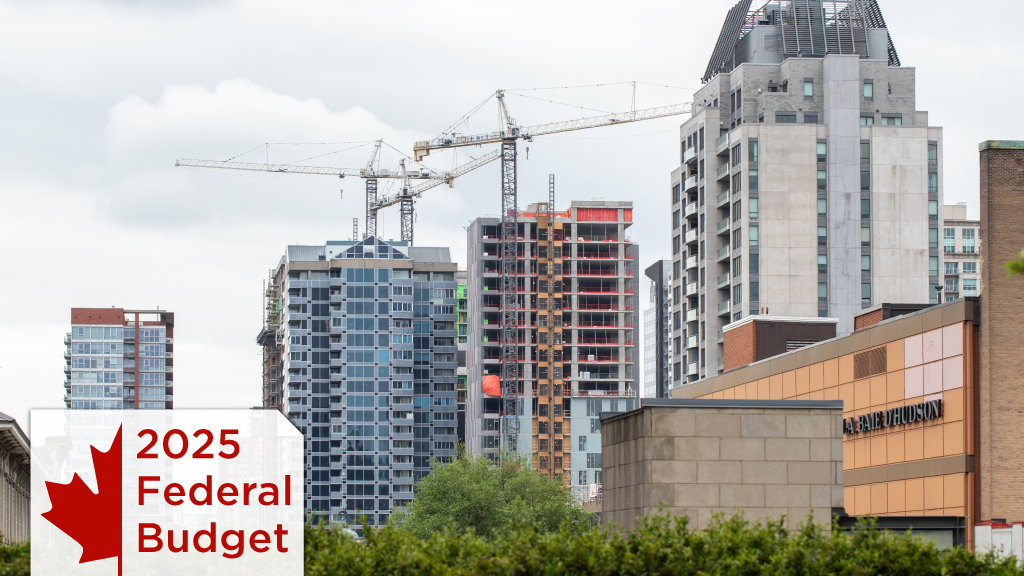
Budget 2025, coined Canada Strong, sets out several initiatives the government states will improve the housing supply and affordability gap in the country. This includes a previous promise to eliminate the GST for first-time buyers at or under $1 million; reducing the GST for first-time home buyers on new homes between $1 million and $1.5 million; launching the new Build Canada Homes agency with an initial investment of $13 billion over five years starting in 2025-26; and $12 billion over 10 years for housing enabling infrastructure.
For the alliance, it’s the nuances that make all the difference, stating the GST/HST components are “only for first-time buyers – a very small fraction of the market.
“With this narrow application, the GST/HST on new homes will continue to erode affordability for Canadians in large urban centres where the need is greatest, leaving middle class buyers behind.”
Another aspect that is “troubling” pertains to Development Charges (DCs).
“Not only has the federal government’s language changed markedly, backing away from the commitment to reduce DCs by 50 per cent, but the commitment is now only a framework for federal, territorial and provincial agreements, not an actionable plan to reduce municipal housing fees with any sense of urgency.”
The Canadian Home Builders’ Association (CHBA) shares in the alliance’s concerns.
“The budget unfortunately retreats from the Liberal platform’s commitment to work with municipalities to reduce development taxes by 50 per cent. Over the past two decades, these taxes have soared by 700 per cent, pricing countless Canadians out of the market,” the CHBA notes, adding the budget also missed the mark on supporting skilled workers.
“It only announced training measures that support unions, when only about 10 per cent of residential construction workers outside of Québec are unionized,” it adds.
The Residential Construction Council of Ontario (RESCON) said it was largely pleased with Budget 2025, adding it solidifies pledges and programs the federal government announced earlier to spur new housing construction, especially the commitment to cut sales taxes.
“Eliminating the GST on new homes at or under $1 million and reducing it on those up to $1.5 million for first-time buyers is a step in the right direction because exorbitant taxes, fees and levies are crippling the residential construction industry,” says RESCON president Richard Lyall. “First-time buyers represent a substantial segment of the market, and we are already seeing increased traffic at sales centres as a result of the move. It is a step in the right direction.”
Habitat for Humanity echoed RECON’s praise, but is urging Ottawa to share how the measures “will meet Canadians’ aspirations to own a home.”
Source: Read the original article at Budget 2025 a ‘deeply’ disappointing ‘missed opportunity’ for the housing sector on canada.constructconnect.com

