
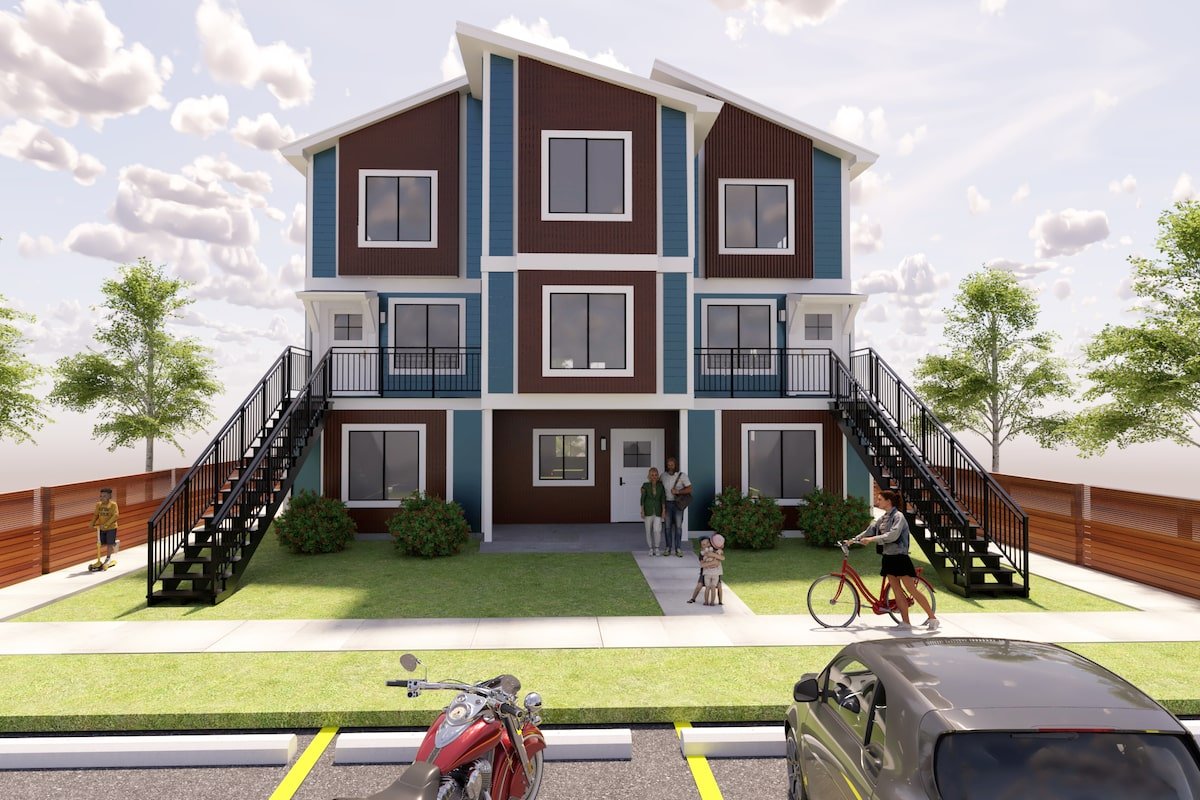
B.C. Industry Aims to Develop a Model for Modular Housing Nationwide
The construction industry in British Columbia is undergoing a transformative shift with the increasing focus on modular construction as a viable solution to housing shortages. Recently, Prime Minister Mark Carney announced a substantial investment of $13 billion earmarked for modular housing across Canada. This funding aims to enhance the production and implementation of factory-built structures, which are rapidly gaining traction for their efficiency and cost-effectiveness.
At the forefront of this movement is Modular BC, an organization dedicated to the factory-built modular home sector. The group is collaborating with the National Research Council to devise standardized, permit-ready multiplex designs, including four- and six-plex units intended to streamline the home construction process. Currently, modular construction comprises approximately 4.5% of British Columbia’s housing market, with aspirations to escalate this figure to 25% within five years. Such a leap would not only boost production capabilities but could also significantly reduce housing costs and timeframes, with the potential to cut building timelines by up to 50%.
The push for modular homes is timely, as rising housing demands necessitate innovative building practices. Modular BC’s initiative aligns perfectly with the province’s Bill 44, which mandates local governments permit small-scale multi-unit housing. This regulatory framework is poised to facilitate a nationwide standardized approach to modular deployment, enhancing scalability and efficiency across the industry.
Moreover, the federal government’s Build Canada Homes program aims to address affordable housing challenges by leveraging public land and promoting modern construction methods, such as modular and mass timber. This strategic focus not only aligns with sustainability goals—by emphasizing energy-efficient and low-waste building practices—but also promises job creation within the local economy.
Despite the enthusiasm surrounding modular construction, challenges remain. One notable barrier is the financing structure, which is predominantly designed for traditional site-built construction. Industry experts urge the government to create conducive financial frameworks that support the upfront costs associated with factory-built modules, thus enabling developers to navigate these hurdles more effectively.
As the sector evolves, it is essential to address misconceptions surrounding modular homes, often erroneously equated with lower-quality housing types. The current generation of modular structures offers customizable, high-quality designs that can seamlessly integrate into established communities. As production capacity increases through initiatives like Modular BC’s, the potential for rapid housing solutions becomes increasingly compelling, promising a significant impact on Canada’s housing crisis.
📋 Article Summary
- Modular Construction Expansion: B.C. is spearheading a movement towards standardized modular multiplex housing, supported by a $13-billion federal investment to accelerate delivery and reduce costs in Canada’s housing market.
- Standardization Efforts: Modular BC is developing scalable, permit-ready designs for four- and six-plex units to increase modular construction’s share of housing from 4.5% to 25% in five years.
- Government Support: The Build Canada Homes initiative emphasizes using modern construction methods, aiming for a 50% reduction in building timelines and 20% in costs, particularly for low- and middle-income households.
- Industry Challenges: Despite optimism, financing hurdles and existing design variability pose challenges; industry experts call for reforms to support modular funding mechanisms.
🏗️ Impact for Construction Professionals
The recent announcement regarding the $13 billion investment in modular construction presents substantial opportunities for construction company owners, project managers, and contractors. First, embracing modular construction could significantly shorten project timelines—potentially reducing construction duration by up to 50%. This can lead to faster cash flow and increased project capacity.
Professionals should assess their current capabilities and consider investing in training for modular construction techniques to remain competitive. Collaborating with Modular BC could provide valuable insights and access to standardized designs, enhancing efficiency and reducing costs.
However, challenges remain, particularly in financing, as traditional funding models often do not align with modular payment structures. Engaging with financial institutions to develop solutions tailored for modular projects is crucial.
Incorporate modular construction capabilities into your strategic planning to diversify your offerings. This could involve forming partnerships with modular design firms or investing in factory-built home technologies. By positioning your business for this growing trend, you can capitalize on evolving market demands while improving operational efficiencies.
#B.C #industry #hopes #create #model #modular #housing #Canada

