
⭐ Our BuildCanadaHomes.org Analysis:
Takeaway
The article reveals a significant surge in Canada’s population growth, primarily driven by immigration, which has escalated from a historical average of 1.1% per year to 2.9% and 3.0% in 2023 and 2024, respectively. This rapid influx has outpaced housing supply, prompting the Ottawa government to establish "Build Canada Homes" (BCH) with a goal to double annual home construction from 250,000 to 500,000 units. However, the author argues that such a target is unrealistic given the existing skilled labor shortages and inefficiencies inherent in government-run housing initiatives. The piece advocates for a reduction in immigration rates to restore equilibrium in the housing market, positing that over-reliance on government agencies will lead to inefficiency and market distortions.
For home builders, developers, and skilled trades in the Greater Toronto Area (GTA) and broader Ontario, the ramifications are profound. The push for increased housing supply through BCH may exacerbate labor shortages due to the existing skills gap, making it tougher for project timelines to be met while driving costs higher. One actionable takeaway is for industry stakeholders to invest in workforce training and partnerships with local educational institutions to mitigate the skilled labor deficit. Why it matters: creating a robust training pipeline can enhance project viability and competitiveness, ensuring Ontario’s construction businesses can better navigate impending challenges posed by government initiatives while simultaneously addressing skill gaps within the industry.
From 1980 to 2022, Canada’s population increased 1.1 per cent a year on average. Then in 2023 and 2024, it rose 2.9 and 3.0 per cent, respectively — almost three times that rate. Not surprisingly, this sudden and dramatic increase exceeded the economy’s capacity to supply the housing needed by the added residents, 93 per cent of whom were immigrants.
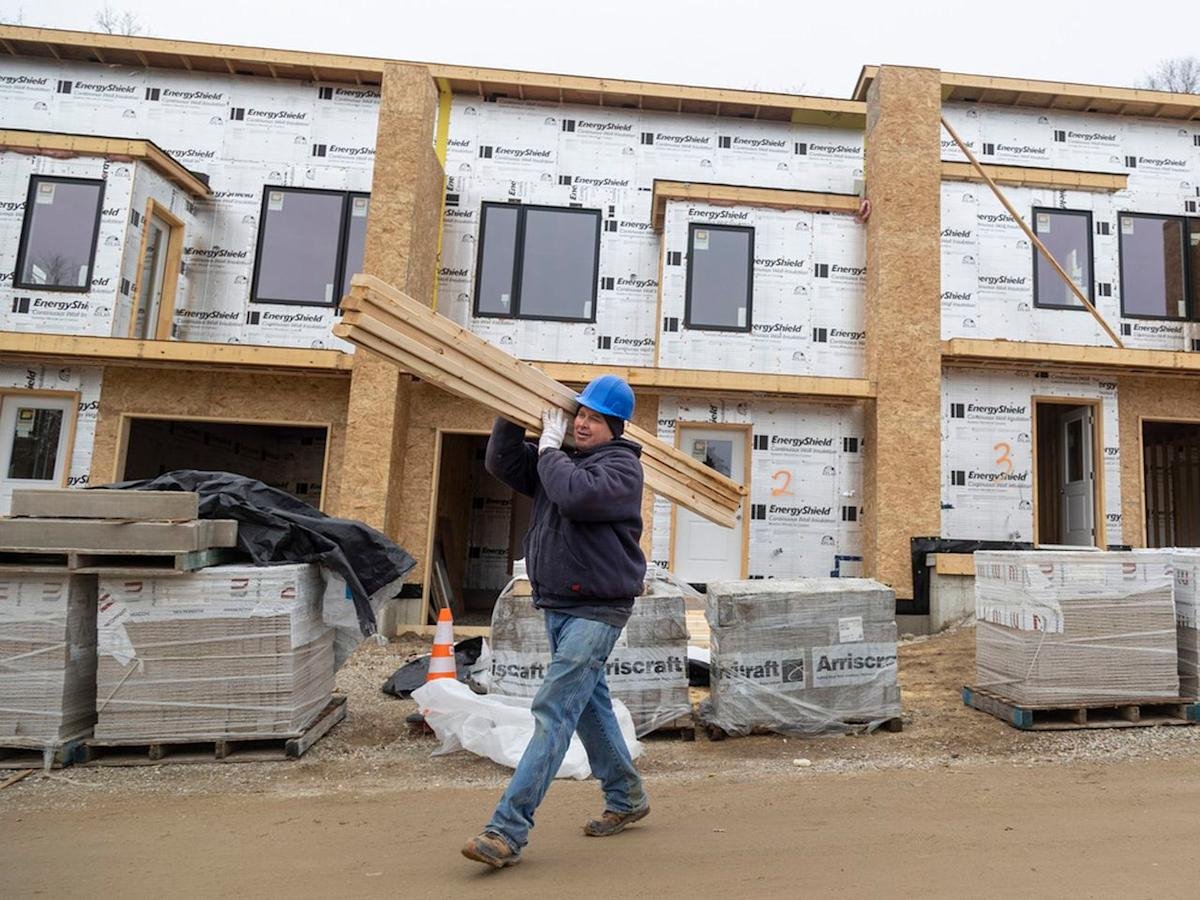
To deal with the resulting spike in house prices, Ottawa has created a new agency — “Build Canada Homes” — and charged it with doubling construction of new homes from today’s 250,000 a year to 500,000.
The creation of BCH violates an important economic principle: “Deal with economic problems by eliminating their causes, not by creating new problems and market distortions.” BCH will badly distort a homebuilding industry that in general has served Canadians well through centuries of ups and downs in demand, interest rates, building costs, consumer tastes, technologies and immigration rates. No government bureaucracy can juggle all these variables as well as private firms and entrepreneurs can.
By any reasonable estimate the 500,000 target is utopian. Land and capital aren’t such a big problem but there is a serious shortage of qualified construction workers. And it can’t be solved by increased immigration, not in the short run, at least. New immigrants can help build houses but that takes time and they need somewhere to live as soon as they arrive. Belief that somehow prefabricated home construction will solve the labour shortage is equally utopian. Pre-fab technology has been around for a long time. Private entrepreneurs don’t use it because it is too difficult and expensive.
Government agencies like BCH have poor records as producers of services. They are always unionized, which means their labour costs are higher than in the private sector. And political forces that influence the location of production facilities, the technologies used, who gets hired, the choice of building materials and so on decrease the efficiency of their operations. Is anyone willing to bet on when the first BCH house will be sold, what it will cost and when the agency will suffer its first scandal?
Folk wisdom says that “if you are in a hole and want to get out, first stop digging.” The federal budget announced that the 2026-2028 immigration plan will stabilize permanent resident admission targets at 380,000 per year for three years, down from 395,000 in 2025. It will also reduce the target for new temporary admissions from 673,650 in 2025 to 385,000 next year and 370,000 in 2027 and 2028.
That’s still too high. In the past, house prices were stable when immigrants numbered 250,000 annually. We’re a bigger country now. Perhaps the sustainable number today is 300,000, but the scheduled number is three times that.
Source: Read the original article at Affordable homes require less immigration, not a new housing industry on ca.finance.yahoo.com

