
Accessible Homeownership: Canadian Perspectives on Housing Policy
On February 6, 2026, Abacus Data, in collaboration with the Canadian Home Builders’ Association (CHBA), released significant findings from a national survey addressing the ongoing housing crisis in Canada. As housing affordability continues to plummet, the survey reveals alarming insights about Canadians’ perceptions of government effectiveness and their aspirations for homeownership.
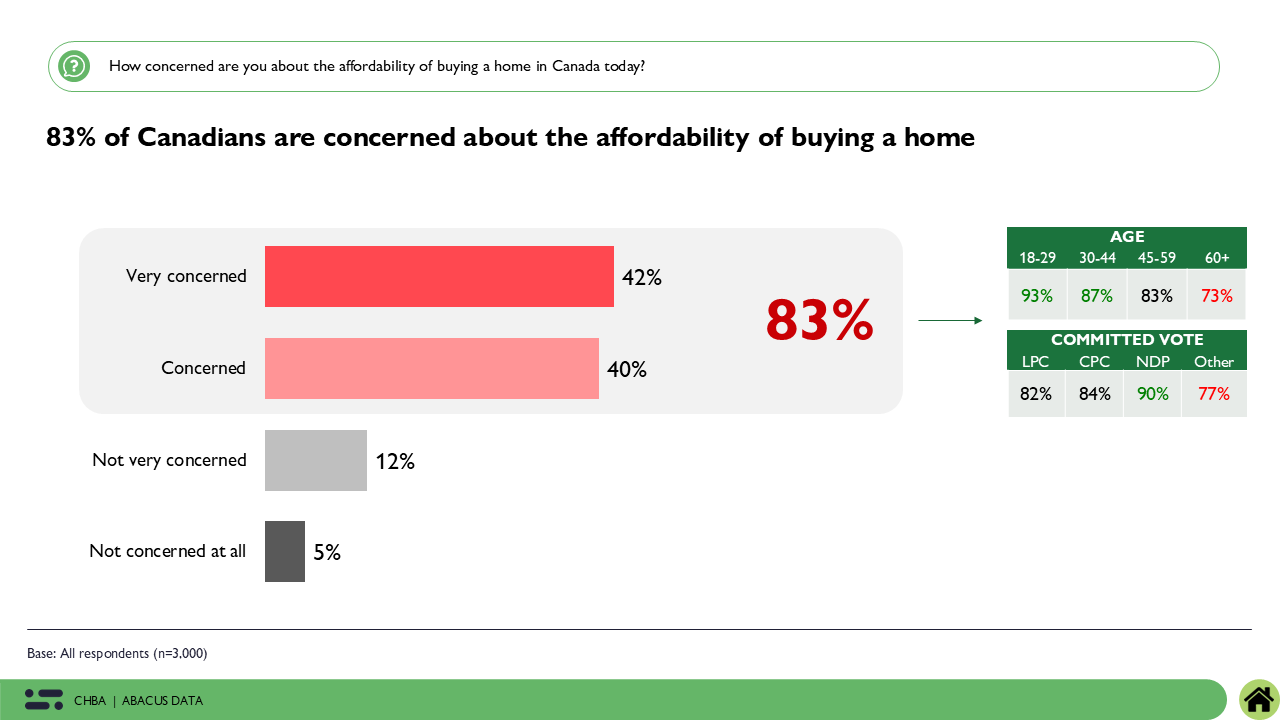
At the core of the crisis is a pronounced gap between the escalating unaffordability of homes and the perceived inadequacy of governmental responses. Findings indicate that 83% of Canadians view housing affordability as a severe crisis, emphasizing a collective sentiment that the system disproportionately undermines middle-income families. This is particularly evident among younger demographics; a striking 93% of individuals aged 18 to 29 express concern over affordability issues, reflecting a generational struggle to enter the housing market.
Despite these challenges, a fervent desire for homeownership persists. Approximately 70% of non-homeowners express a continued aspiration to invest in a home, revealing that the barriers they face are largely systemic rather than born from lack of interest. Notably, 77% of non-homeowners affirm that they would like to own if feasible. However, this aspiration is increasingly challenged by dwindling confidence in the attainability of homeownership; only 29% of non-homeowners currently feel confident about their potential to purchase a home in the future.
The survey also exposes a profound dissatisfaction with governmental action across all levels, with a mere 20% of respondents satisfied with municipal efforts and even lower satisfaction ratings at provincial (19%) and federal (17%) levels. Canadians overwhelmingly believe that the federal government bears the most responsibility in addressing housing affordability, placing pressure on policymakers to adopt more effective strategies.
Respondents highlighted pressing areas for improvement, with 63% advocating for enhanced rental affordability and 67% stressing the need for greater focus on homeownership affordability. This indicates a resounding consensus that the solution must encompass both market and non-market housing to achieve a balanced approach.
The implications are clear: Canadians demand actionable policies, such as expanding GST relief and reforming development charges to alleviate costs associated with new housing developments. As the survey underscores, the current affordability crisis is intricately linked to systemic inadequacies in housing supply and regulatory constraints.
In conclusion, the findings present a compelling case for urgent and substantial reform within Canada’s housing sector. The expectation for governments to deliver effective solutions has reached a critical threshold, as citizens look for reforms that restore confidence in the housing market and facilitate genuine pathways to homeownership.
📋 Article Summary
- Canadians view the housing crisis as a significant issue affecting not just low-income families but also the middle class, with 83% expressing concern about home affordability.
- While a strong desire for homeownership persists, confidence in achieving this goal has plummeted, with only 29% of non-homeowners feeling optimistic about purchasing a home.
- There is a clear demand for government action to prioritize market housing affordability, as Canadians feel current policies are inadequate to address the scale of the crisis.
- Many support policy reforms such as expanding GST relief and revising development charges to lower housing costs, indicating a readiness for structural changes in the housing system.
🏗️ Impact for Construction Professionals
The recent survey highlights a significant disconnect between Canadians’ desire for homeownership and the current housing market’s accessibility. For construction company owners, project managers, and contractors, this signals both challenges and opportunities.
Practical Business Implications: With heightened public concern over housing affordability, there’s increased pressure on the construction sector to deliver more homes quickly and cost-effectively.
Opportunities: Companies can capitalize on support for policies like expanded GST relief and development charge reforms. Engaging in discussions around these reforms can position your business as a proactive participant in the housing solution, strengthening relationships with government and stakeholders.
Challenges: A potential slowdown in housing starts could arise if governments fail to align their policies with market needs. Keeping informed on policy developments will be crucial for anticipating shifts in demand.
Actionable Insights: Implement strategies to reduce construction costs and improve efficiency, such as adopting innovative building techniques or materials. Actively seek partnerships with local governments and non-profits to align efforts with public interests.
Strategic Planning: Adjusting your business model to focus on smaller, affordable housing projects rather than high-end developments may help capture a larger share of the market. Monitor public sentiment and policy changes closely to adapt your operations accordingly.
#Unlocking #Homeownership #Canadians #Housing #Policy

