
Mattamy Homes is pivoting to prefabricated, missing-middle housing as it navigates a prolonged real estate downturn and weak new-home sales, The Toronto Star reported.
CEO Brad Carr told the Star that the company has spent the past 18 months conducting extensive consumer research to better understand buyer preferences in 2026.
“We’ve been doing a tremendous amount of consumer research, and we’ve really tried to get underneath what drives home ownership decisions in 2026,” he told his interviewer.
The strategy centres on building more multi-unit, family-oriented housing—particularly two- and three-bedroom units in mid-rise buildings—rather than smaller condominium units that have dominated recent development. The company is deploying a six-storey format that works for Mattamy and prospective homebuyers alike.
“It’s really trying to get affordable housing product in that six-storey format so we can deliver density but do it at a price that people can afford,” Carr told the Star.
The shift comes as Ontario’s housing market faces record-low new-home sales and stalled construction, with developers struggling to secure financing amid weak presales. Mattamy itself has cancelled projects due to insufficient demand, including the Clove condominium development in Toronto’s Etobicoke district on which the company had partnered with QuadReal, and the Clockwork 4 tower in Oakville, Ont.
“We were very disappointed we had to cancel that [Clove] project,” Carr told the Star. “It was a direct reaction to the market.
“I believe we’ve seen a 90% reduction from the 10-year average in terms of annual sales. It really is a moment where we need to reset in terms of what it looks like to bring those types of product to the market.”
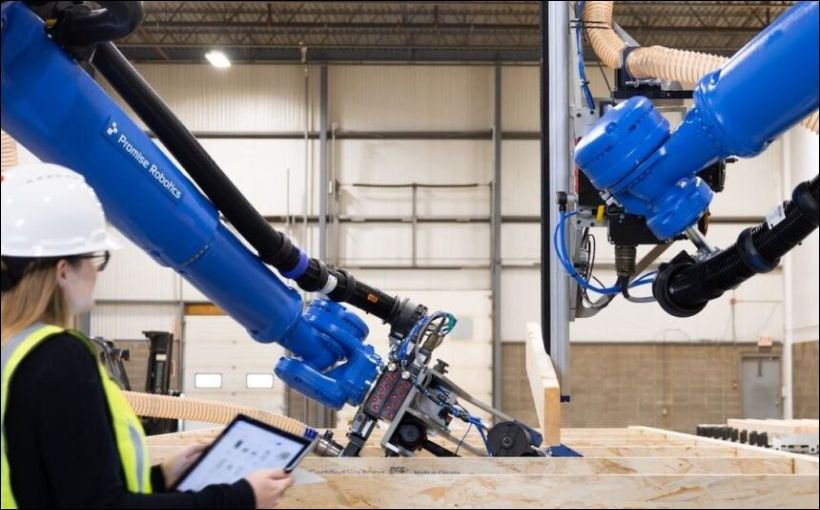
To lower costs and improve efficiency, the company is investing in prefabricated construction, where housing components are manufactured off-site and assembled on location. Carr said this approach will allow Mattamy to scale production and improve affordability.
The company is building a 470,000-square-foot factory near Toronto Pearson International Airport, with plans to produce thousands of prefab homes annually. Initial projects will launch in Mississauga, with future expansion planned across the Greater Toronto Area.
As Connect reported previously, Mattamy has also partnered with prefab-housing manufacturing to scale up two master-planned communities in Alberta. The prefabricated structures will be built in the robotics firm’s new 60,000-square-foot Calgary manufacturing facility, which will serve as a flagship hub for next-generation homebuilding and provide a scalable model that can be replicated in U.S. markets.
Carr told the Star that recent government measures, including tax rebates and reduced development charges, could help stabilize the market and support new construction.
“We’re on the precipice of, I think, some real stabilization of our sector and hopefully a return to growth,” he said.
But, he added: It’s up to developers like to build housing that prospective buyers want and can afford.
Despite current challenges, Carr emphasized the company’s long-term focus on increasing housing supply, regardless of the building type.
“We want to build more houses,” he told his interviewer. “Our growth and our definition of success is to have more homes built, more workers employed and more careers created. It’s all about volume.”
Mattamy expects to emerge stronger from the downturn.
“We’ve always come out of each downturn a little better prepared for the next run and how to better meet the needs of customers,” Carr said in his interview with the Star. “We learn in moments like this and we have aspirations to be here for another 48 years.”
Mississauga, Ont.-based Mattamy ranks among Canada’s largest housing developers, operating in Ontario, Alberta and the U.S.
Pictured: Promise Robotics technology being used to build a modular-housing component.
Photo: Promise Robotics

