
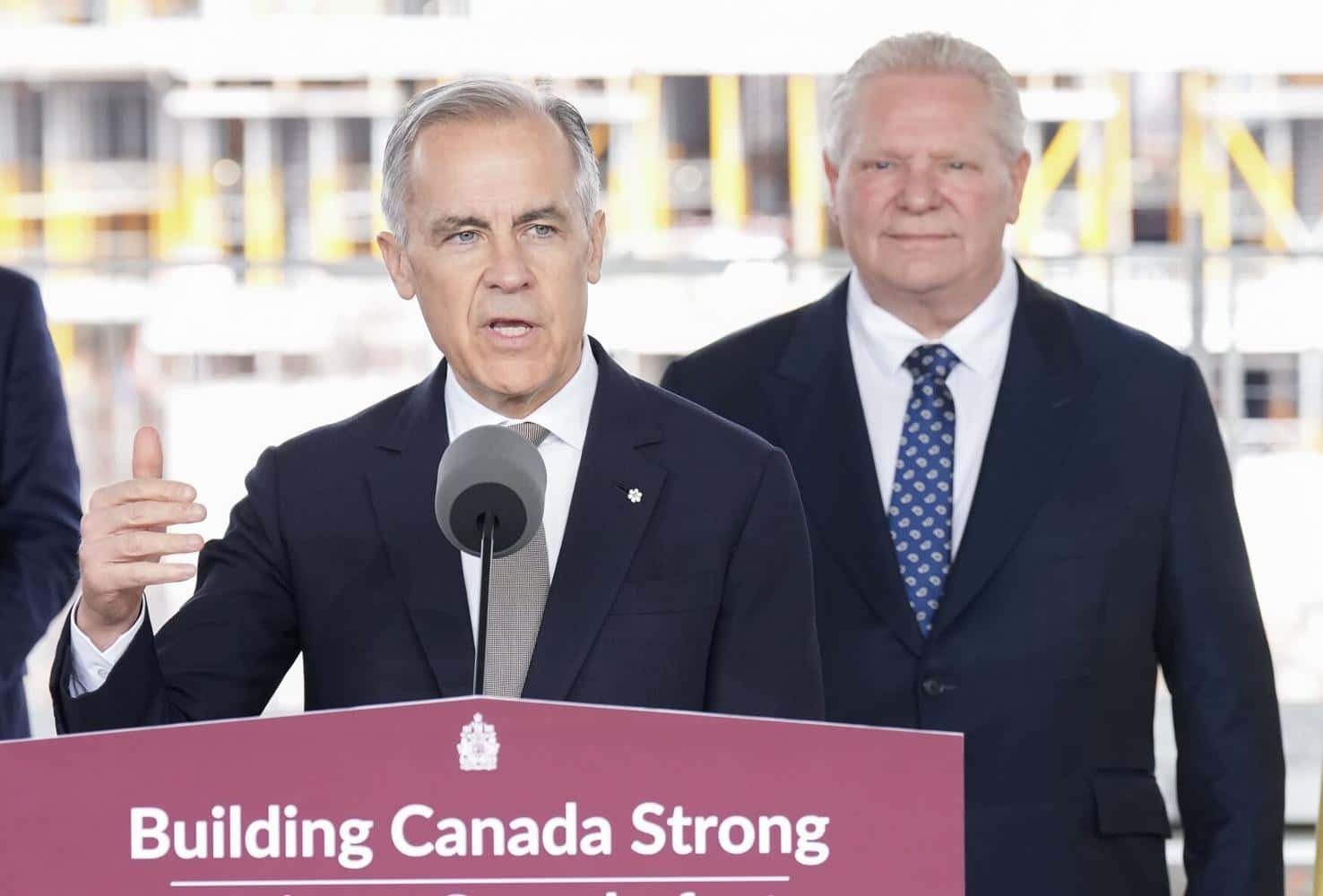
Ontario, Canada Signs $8.8 Billion Agreement to Construct Affordable Housing
In a notable collaboration between the provincial and federal governments, a new initiative aims to alleviate the persistent housing shortage in Canada, particularly in Ontario. Prime Minister Mark Carney and Premier Doug Ford unveiled a strategic partnership designed to slash the cost of constructing new homes, addressing escalating housing prices and enhancing supply in the market. This development is timely, as the housing sector has faced increasing financial pressures due to rising development-related costs.
A focal point of this initiative is a significant reduction in development charges (DCs) for new residential projects. Over the next three years, these charges will decrease by as much as 50%. This measure is expected to yield substantial savings for prospective homeowners, estimating a reduction of approximately $40,000 per house. Additionally, the federal government has announced a Harmonized Sales Tax (HST) cut of 13% on new homes, potentially bringing total savings for buyers to as much as $200,000. Such cost-reducing strategies are critical given the current landscape, where high upfront costs are a significant deterrent to new construction.
Prime Minister Carney emphasized the innovative partnership as a means to leverage the respective strengths of each level of government to achieve common objectives—namely, increasing housing supply, reducing housing costs, and generating new employment opportunities in the skilled trades. He noted that historically high development charges have been not only inflating home prices but also stalling new construction projects, which highlights the necessity of this intervention.
Furthermore, Premier Ford underscored the urgency of these reforms by describing the agreement as “historic” and issuing a cautionary note to municipalities: Funding will be contingent on cooperation. Municipalities that do not comply with the requirement to reduce DCs will forfeit provincial housing funding. This requirement is designed to incentivize local governments to participate actively in the initiative, fostering a cooperative approach to addressing the housing crisis.
To support this substantial reduction in development fees, the provincial government will allocate $8.8 billion over the next decade. This funding aims to mitigate the financial impact incurred by municipalities as they lower DCs, thereby promoting a more conducive environment for residential development.
In conclusion, the collaboration between the Ontario government and the federal government marks a pivotal moment in the construction industry. By addressing costs associated with new housing developments, this initiative seeks not only to enhance affordability for buyers but also to stimulate growth and innovation within the construction sector. The implications of these changes are profound, potentially paving the way for a more sustainable housing market in Canada.
📋 Article Summary
- A new partnership between Ontario and the federal government aims to reduce building costs and increase housing supply across Canada by cutting development charges (DCs) by up to 50% over the next three years.
- Homeowners could save approximately $40,000 due to the reduction in DCs, with combined savings from development charges and a 13% Harmonized Sales Tax (HST) cut totaling up to $200,000.
- The agreement, called "historic" by Premier Ford, ties provincial funding to municipalities that agree to cut DCs, emphasizing accountability in housing development.
- A total of $8.8 billion will be allocated over ten years to offset the financial impact of these reductions on municipalities, addressing delays in new housing projects.
🏗️ Impact for Construction Professionals
The recent partnership between Ontario and the federal government, cutting development charges (DCs) by up to 50%, has significant implications for construction companies.
Practical Business Implications: Construction firms can reduce project costs, making bids more competitive and potentially increasing project intake. The $8.8 billion allocation over ten years means stable revenue streams for municipalities, which can expedite permit processes.
Opportunities and Challenges: While the reduced costs can accelerate new builds, companies must be aware of municipalities’ terms for funding. Proactively engaging local governments to ensure compliance with new regulations can prevent funding loss.
Actionable Insights: Update pricing strategies and marketing to highlight potential savings for clients. Reevaluate project margins to capitalize on lower costs and boost your competitive edge. Attend municipal meetings to stay informed about regulations and funding allocations.
Day-to-Day Operations Impact: Streamlining operations to accelerate project timelines can maximize profits as builders respond to increased demand. Shift strategic planning to focus on acquiring land and securing financing early to leverage savings from DC reductions. This is the time to ramp up outreach and networking in the community to secure more contracts.
#Ontario #Canada #sign #billion #deal #build #affordable #homes

