
Housing Continues to be the Federal Benchmark Canadians Are Monitoring Intently
The Evolving Landscape of Housing Affordability in Canada: Key Findings from Recent Polling
In a recent survey by Abacus Data, conducted in partnership with the Canadian Home Builders’ Association (CHBA), significant insights into the state of housing affordability in Canada reveal a widening gap between public perception and governmental action. With the Liberal party currently enjoying an 11-point lead over the Conservatives, issues surrounding homeownership remain a pivotal concern for voters, particularly as many Canadians feel their housing system is failing.
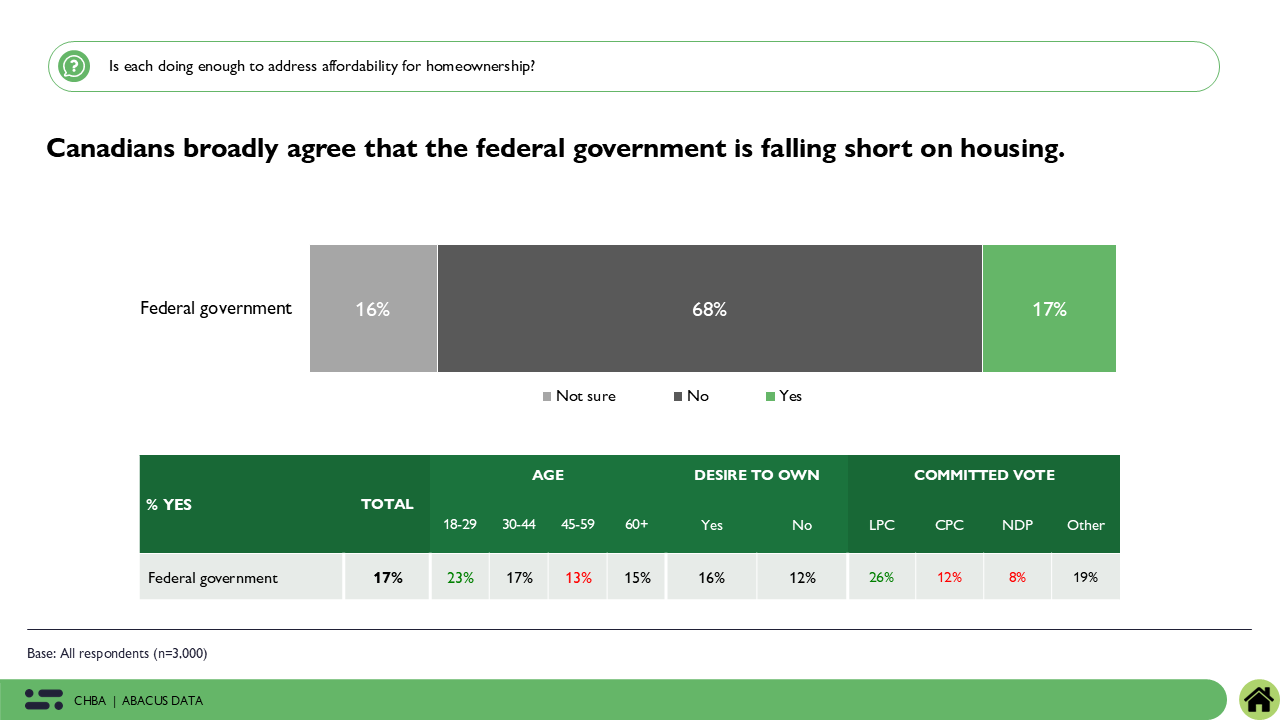
The data indicates that a mere 17% of Canadians believe the federal government is taking sufficient measures to improve homeownership affordability. This sentiment is particularly strong among essential demographic groups, with only 13% of respondents aged 45-59 expressing confidence in government efforts. Furthermore, 40% of Canadians think no progress has been made since the last election, illustrating a tangible sense of frustration with current policies.
A notable skepticism surrounds the government’s Strategy for Affordable Housing, as only 23% of respondents anticipate meaningful improvements stemming from its plans. Among those surveyed, 39% rated the government’s housing performance as worse than expected, including a considerable proportion of Liberal supporters. This signals not just general discontent but a pressing call for actionable reforms.
In light of these sentiments, the recent introduction of the GST/HST rebate for first-time home buyers is a timely policy shift intended to mitigate some costs associated with home purchasing. Under the Making Life More Affordable for Canadians Act, first-time buyers can potentially recover up to $50,000 in taxes on new homes priced below $1 million. While public opinion on this rebate is largely positive—nearly 47% of Canadians support the measure—there remains a consensus that broader measures are necessary to enhance housing supply and affordability.
The report suggests that Canadians are open to policy extensions, with 54% advocating for the GST rebate to apply to renovations that create new housing units, indicating a desire for versatile solutions that stimulate supply in existing communities. The challenge lies in addressing structural costs, such as development charges that can inflate the price of new homes, alongside expediting approvals and reducing regulatory barriers to construction.
Ultimately, the call for enhanced government action in housing is more than just a matter of public opinion; it is a crucial issue shaping the future of homeownership in Canada. For construction professionals and policymakers alike, the imperative is clear: a decisive movement toward addressing the structural inefficiencies in the housing market is essential for restoring public confidence and ensuring the viability of middle-class homeownership. As the landscape evolves, the alignment between public expectations and governmental initiatives will be paramount in reshaping the future of Canadian housing.
📋 Article Summary
- Canadians perceive a significant gap between the housing crisis and governmental efforts to improve affordability, with only 17% feeling enough is being done to address homeownership issues.
- Skepticism about the federal housing strategy remains high, with only 23% believing the government’s plans will positively impact affordability.
- The recent introduction of a GST rebate for first-time buyers has garnered support, yet many Canadians want this relief extended to all buyers and linked to increased housing supply.
- Overall, there is a strong demand for government action to tackle structural costs and boost housing availability, reflecting widespread frustration over current affordability challenges.
🏗️ Impact for Construction Professionals
The recent announcement of the GST/HST rebate for first-time home buyers presents significant opportunities for construction companies and related professionals. With 47% of Canadians supporting this initiative, there’s potential for increased demand for newly built homes, particularly from first-time buyers.
Business Implications:
- Increase in Sales: Position your projects to attract first-time buyers by highlighting eligibility for the rebate, thus enhancing marketability.
- Supply Chain Optimization: As demand increases, streamline your supply chain to efficiently manage costs, taking advantage of the favorable tax conditions.
Opportunities and Challenges:
- Be prepared for a potential uptick in competition—many home builders will likely vie for the same clientele. Differentiate your offerings through quality and innovative designs.
- Monitor ongoing changes in federal housing policies that may impact your project timelines or costs.
Actionable Insights:
- Educate your sales teams about the rebate details to effectively communicate with potential buyers.
- Reassess your strategic planning to focus on developing homes that cater specifically to first-time buyers, possibly incorporating smaller, affordable designs.
By aligning your operations with these developments, you can optimize your strategic planning and day-to-day actions to capitalize on this opportunity.
#Housing #Remains #Federal #Test #Canadians #Watching #Closely

