
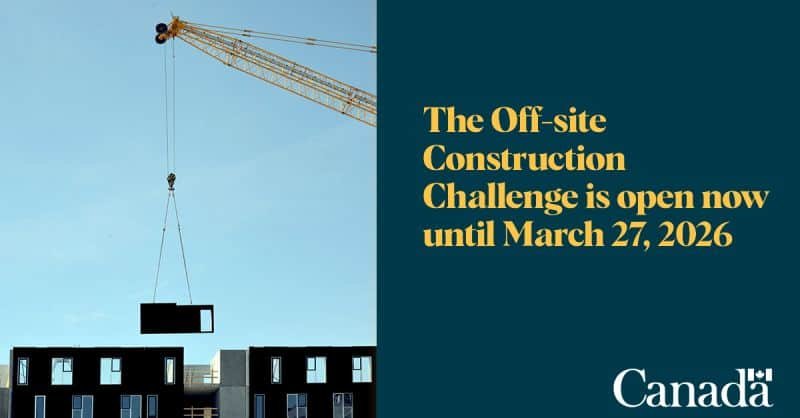
Canada Advances Low-Carbon Building Initiatives with New Off-Site Construction Challenge
Ontario Construction Sector Advances with Off-Site Construction Challenge and GCWood Funding
The construction landscape in Ontario is poised for a significant transformation, fueled by recent initiatives from Natural Resources Canada aimed at enhancing productivity and sustainability within the industry. The federal government’s call for applications for the Off-Site Construction Challenge is a crucial step towards leveraging innovative building methods, notably in mass-timber construction, to expedite housing delivery and improve overall project efficiency.
The Off-Site Construction Challenge will support projects that utilize off-site manufacturing techniques, which are anticipated to not only slash construction timelines but also improve building performance. By promoting prefabricated systems, including mass timber and engineered wood products, the initiative underscores a shift towards sustainable construction practices that align with Canada’s broader strategy to reduce carbon emissions.
Complementing this challenge is the announcement of $580,000 in funding for Cecobois through the Green Construction through Wood (GCWood) program. Administered by the Conseil de l’industrie forestière du Québec, this funding will facilitate the documentation and promotion of the benefits associated with utilizing wood to decarbonize the construction sector. The emphasis on wood as a primary material is timely, as it not only strengthens the technical expertise within the industry but also fosters knowledge transfer, paving the way for greater adoption of bio-based insulation materials.
Tim Hodgson, Minister of Energy and Natural Resources, emphasized the importance of forestry as a crucial element of national strength, highlighting its role in job creation and environmental stewardship. The initiatives are expected to enhance the use of locally sourced materials, thereby supporting the Buy Canadian Policy and Build Canada Homes initiatives. Increased investment in local wood processing is anticipated to create high-value jobs, particularly through developments in engineered wood and modular systems.
Moreover, the construction sector’s reliance on local materials is a key takeaway from this news. By integrating locally-sourced wood and bio-materials into non-residential and multi-residential projects, the industry can significantly reduce its carbon footprint while positioning itself as a leader in sustainable building practices.
The Canadian forest sector already supports nearly 200,000 workers, including over 11,000 Indigenous workers, contributing upward of $20 billion annually to the GDP. As the Off-Site Construction Challenge and related funding initiatives unfold, the potential for job creation and economic growth within this sector remains optimistic.
In conclusion, the Ontario construction industry’s drive for innovation and sustainability, underpinned by the Off-Site Construction Challenge and strategic funding, presents a compelling opportunity for advancing green building practices while fostering economic resilience. As stakeholders embrace these initiatives, the industry’s future looks increasingly sustainable and efficient.
📋 Article Summary
- Natural Resources Canada is inviting applications for the Off-Site Construction Challenge to enhance building productivity, reduce timelines, and improve performance using innovative methods like mass-timber construction.
- The federal government has announced $580,000 in funding for Cecobois through the GCWood program to promote wood use for decarbonizing construction.
- Cecobois aims to document and share the benefits of wood and bio-based materials, advancing carbon neutrality in non-residential buildings.
- These initiatives align with the federal strategy to prioritize Canadian materials in infrastructure projects, supporting local economies and reducing carbon footprints.
🏗️ Impact for Construction Professionals
Construction company owners, project managers, and contractors should view the Off-Site Construction Challenge as a significant business opportunity. By participating, they can access funding to innovate building methods, particularly using mass-timber and prefabricated systems, which could enhance productivity and shorten project timelines.
Practical Business Implications: Adopting these innovative techniques can lower costs and improve project efficiency, promoting a competitive edge in a tight market.
Opportunities: Engage with Natural Resources Canada’s funding to explore advanced off-site construction methods. This can lead to enhanced project capabilities, increased demand for eco-friendly solutions, and alignment with the federal Buy Canadian Policy, potentially opening doors to government contracts.
Challenges: While the shift to innovative construction methods may require upfront investment and training, the long-term benefits, such as reduced carbon footprints and compliance with sustainability regulations, outweigh the costs.
Actionable Insights: Evaluate your current processes for integration of mass-timber and prefabricated systems. Invest in training sessions to upskill your team on these new technologies.
Incorporating these strategies into day-to-day operations can fortify your business against market fluctuations while aligning with overarching governmental sustainability goals. Start by assessing suitable projects that could benefit from this funding and innovation.
#Canada #promotes #lowcarbon #construction #launches #offsite #construction #challenge

