
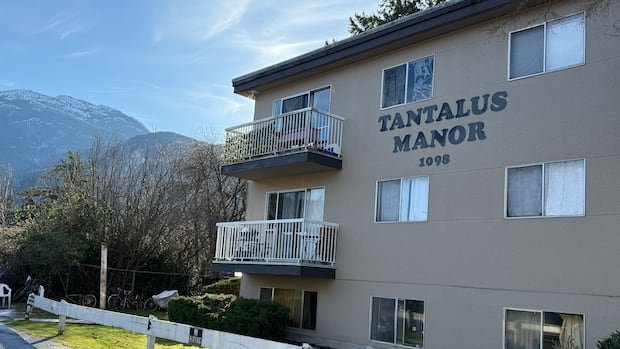
61-Year-Old Squamish, B.C. Apartment Building to Undergo $4.9 Million Federal Renovation
In a pivotal move to enhance affordable housing in British Columbia, the federal government has announced a substantial investment of $4.9 million towards the retrofit and upgrading of Tantalus Manor in Squamish. In collaboration with the Hiy̓ám̓ ta Sḵwx̱wú7mesh Housing Society and the Squamish Community Housing Society, this initiative is set to significantly bolster the building’s longevity and energy efficiency, reflecting the growing urgency of housing issues across Canada.
Located outside downtown Squamish, Tantalus Manor is a three-storey apartment complex constructed in 1965, comprising 40 units that currently feature rental rates below the average local market price. Liberal Member of Parliament Patrick Weiler emphasized that “the cheapest form of housing is the housing that we don’t actually have to build at all,” highlighting the importance of retrofitting existing structures rather than initiating new construction projects. This approach not only conserves resources but also maintains the existing affordable housing stock in a rapidly evolving market.
The retrofit will incorporate an array of energy-efficient upgrades, including transitioning from gas to electrical heating and hot water systems. In addition, the replacement of windows and doors, alongside the installation of energy recovery ventilators and heat pumps, will optimize thermal performance and ensure better air quality. Residents can expect enhanced comfort through improved humidity control and air conditioning, ultimately contributing to reduced energy costs and lower greenhouse gas emissions.
Funding for this project is sourced from the Canada Greener Affordable Housing fund, along with contributions from both the Federation of Canadian Municipalities Green Municipal Fund and additional financial support from local organizations. Importantly, the retrofit will be executed without displacing current residents, with Sarah Ellis of the Squamish Community Housing Society assuring that occupants will remain in their units during the renovation process—a practice that underscores a commitment to community stability.
Moreover, half of the units cater specifically to members of the Sḵwx̱wú7mesh Nation, aligning with efforts to fulfill their goal of housing all community members within a generation. The progressive nature of this initiative not only seeks to enhance environmental performance but also aims to foster social equity by prioritizing enrollment of Indigenous tenants.
In conclusion, the Tantalus Manor retrofit project stands as a vital step in addressing housing challenges in Squamish, exemplifying sustainable practices in renovation and community-focused housing solutions. As similar projects emerge across Canada, the emphasis on retrofitting existing structures may play a crucial role in mitigating the ongoing housing crisis, offering insightful lessons for industry professionals moving forward.
📋 Article Summary
- The federal government is investing $4.9 million to retrofit Tantalus Manor in Squamish, B.C., enhancing its energy performance and extending the building’s lifespan.
- Upgrades will include converting from gas to electric heating, replacing windows and doors, and installing energy recovery ventilators and heat pumps for improved comfort and air quality.
- The renovation aims to maintain affordability across 40 units, with rental rates ranging from $704 to $2,002, without displacing current residents during the upgrades.
- Half of the units are designated for Sḵwx̱wú7mesh Nation members, aligning with their goal to house all members within a generation.
🏗️ Impact for Construction Professionals
The federal investment of $4.9 million for retrofitting Tantalus Manor in Squamish presents significant opportunities for construction professionals. First, contractors can seek contracts for the upgrades, which include transitioning to electric systems, window replacements, and energy efficiency improvements. These projects align with sustainability trends, allowing firms to build expertise in greener building practices.
Second, there’s an increased emphasis on energy performance, encouraging businesses to expand their services toward eco-friendly retrofits. Professionals should consider diversifying into energy auditing and consulting to capitalize on government funding initiatives.
Third, this initiative reinforces the importance of strong community ties. Construction firms should engage with local housing societies like Hiy̓ám̓ ta Sḵwx̱wú7mesh and Squamish Community Housing to position themselves as preferred partners in future projects.
Lastly, firms should plan for workforce adaptability to meet the demand for skilled labor in energy-efficient retrofitting, ensuring their teams are trained in industry best practices. By proactively adapting to these trends, construction companies can strengthen their market position and ensure long-term viability.
#61yearold #Squamish #B.C #apartment #building #4.9M #federal #government #makeover

