
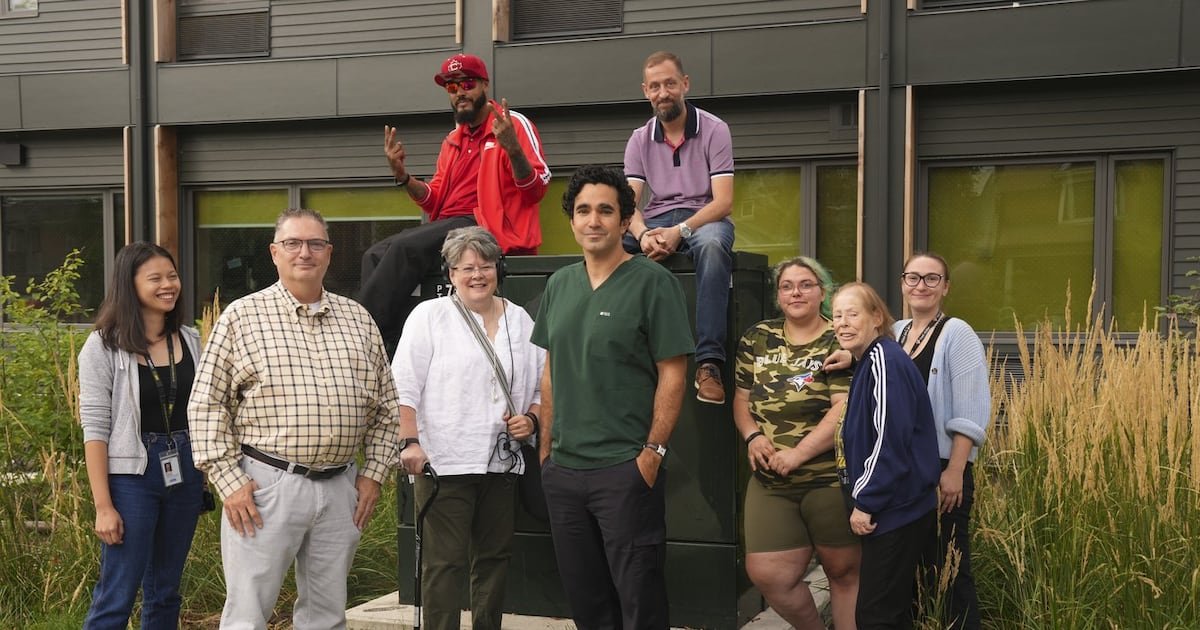
UHN to Expand Housing Program for Homeless Individuals
The University Health Network (UHN) in Toronto has announced an ambitious plan to expand its innovative permanent housing initiative designed for homeless individuals who frequently utilize emergency services. This expansion, which aims to construct 54 new apartments adjacent to the existing Dunn House, symbolizes a significant shift in the approach to health care and homelessness by intertwining these pressing social issues.
The original Dunn House, situated on a hospital-owned parking lot in Toronto’s west end, has demonstrated remarkable outcomes since its inception. Preliminary data revealed that the 48 residents—many battling chronic diseases, mental health challenges, and substance use disorders—reduced their emergency room visits by an impressive 52% within a year of moving in. Furthermore, their average length of stay when admitted to hospitals plummeted by 79%, illustrating the critical connection between stable housing and health recovery.
Dr. Andrew Boozary, the architect of the Dunn House model, emphasizes that homelessness often correlates with deteriorating health outcomes. Without stable housing, these individuals struggle to manage medications or recuperate from medical procedures, perpetuating a cycle of instability. The enhanced housing model thus serves not just as a shelter but as a health intervention, reinforcing the principle that “housing is health.”
The collaborative funding structure of the new project is noteworthy; it includes a substantial investment from the federal Build Canada Homes initiative amounting to $21 million, with additional annual operational support from the Ontario government of $2.6 million. The City of Toronto will also contribute $10 million, showcasing a multifaceted approach to addressing homelessness through solid fiscal partnerships, which is essential for similar ventures across Canada.
Despite these advancements, the broader landscape reveals a troubling increase in homelessness in Ontario. Recent data indicates that nearly 85,000 individuals are experiencing homelessness, a significant rise exacerbated since the onset of the COVID-19 pandemic. With a call to action from federal Housing Minister Gregor Robertson, there is an urgent need to replicate the Dunn House model nationwide to alleviate the escalating crisis.
Toronto Mayor Olivia Chow endorses this paradigm shift, highlighting that such supportive housing initiatives can effectively disrupt the ongoing cycle of homelessness and associated health issues. As the construction industry gets involved in developing these critical projects, a continued focus on sustainable, community-focused designs will be vital in creating functional, supportive environments for vulnerable populations.
In conclusion, the expansion of Dunn House stands as a beacon of hope, not just for its residents but also as a template for future developments that can bridge the gap between housing and health care in Canada.
📋 Article Summary
- The University Health Network in Toronto will double its unique permanent housing program for frequent emergency room visitors, building a new facility next to the successful Dunn House.
- Residents of Dunn House saw a 52% reduction in emergency visits and a 79% decrease in hospital stays after moving in, highlighting the effectiveness of stable housing.
- The Canadian government is investing significantly in the expansion, with a total of $33.6 million coming from federal, provincial, and municipal sources to create 54 new apartments with health support.
- Experts advocate for scaling this housing model across Canada to address the growing homelessness crisis, which is worsening in Ontario, with nearly 85,000 individuals homeless as of 2025.
🏗️ Impact for Construction Professionals
The announcement regarding the expansion of the Dunn House housing model presents a significant business opportunity for construction professionals. Here’s how you can capitalize on this:
Practical Business Implications:
- Bid for Contracts: With $21 million allocated for construction, and supplementary funding from provincial and municipal governments, contractors should prepare to bid for these projects. Establishing connections with the University Health Network and government agencies could facilitate future collaborations.
Potential Opportunities:
- Sustainable and Community-Focused Builds: This project emphasizes socially responsible construction. Firms that prioritize sustainable practices and community engagement can enhance their marketability.
Actionable Insights:
- Form Strategic Partnerships: Collaborate with local health institutions and social organizations to align your projects with community health objectives, improving your bid competitiveness.
- Invest in Training: Equip your team with skills related to building supportive housing and understanding the unique needs of vulnerable populations, ensuring your workforce is prepared for specialized projects.
Day-to-Day Operations:
- Adapt Business Models: Adjust your project management strategies to accommodate government deadlines and regulatory requirements tied to these funding sources, ensuring timely and compliant project delivery.
In summary, this initiative presents not just a chance to engage in impactful construction projects but also a strategic avenue for growth and differentiation in an increasingly socially conscious market.
#UHN #double #housing #program #homeless #people

