
⭐ Our BuildCanadaHomes.org Analysis:
Takeaway
The recent debate surrounding a proposed highrise rental development in Toronto highlights the complexities of urban planning and the competing interests within Ontario’s development landscape. Sanofi Pasteur’s concerns regarding national security related to the proximity of new residential buildings to its facilities have spurred Ontario’s housing minister to consider an MZO that would limit building heights. Developer Tenblock argues that such a measure would jeopardize the viability of their project, which aims to replace an aging structure with over 800 rental units, including some affordable options. This conflict exemplifies the challenges faced by developers as they navigate regulatory hurdles and community opposition, even as the provincial government prioritizes housing supply.
For home builders and developers in the Greater Toronto Area (GTA), this situation signals a potentially detrimental precedent where companies can leverage security concerns to derail housing projects. The invocation of an MZO to limit rather than facilitate development contradicts the Ford government’s commitment to increasing housing stock. Industry stakeholders should closely monitor this case as it may influence future projects, particularly those near sensitive sites. An actionable takeaway is for developers to proactively engage with local stakeholders early in the planning process, addressing concerns head-on to foster dialogue. This proactive approach will not only mitigate the risk of similar challenges arising but will also contribute to a collaborative environment that is essential for advancing Ontario’s housing strategy amid growing demand.
Ontario’s housing minister is considering stepping in to quash a proposed rental development at Toronto’s northern city limits, over concerns raised by a pharmaceutical company.
CBC Toronto first reported in 2022 about Sanofi Pasteur’s opposition to a three-building, highrise project at the corner of Steeles Ave. W. and Dufferin St., neighbouring its sprawling complex. At the time, the company claimed there’s a “national security” risk having hundreds of residents able to look down on its facilities, where vaccine research and development takes place.
Now Vic Fedeli, Ontario’s minister of economic development, job creation and trades, is asking the housing minister to issue a minister’s zoning order (MZO) to limit building heights at the property to 33 metres (or about 10 storeys).
MZOs are issued at the discretion of the housing minister to regulate land use and override municipal bylaws. They’re usually used to facilitate and fast-track development, not limit it.
The Ford government, which has focused heavily on the need to build more housing, could use an MZO to prevent hundreds of rental homes from being built.
The developer, Tenblock, says the height limit would kill the project.
“The site needs the density of market housing to help pay for and make the whole project viable together. So we just can’t proceed at that reduced height,” said Stephen Job, vice-president of Tenblock.

It’s not entirely clear if national security concerns are motivating the province. In a statement, Fedeli’s press secretary said the order would protect against “unnecessary delays” to future expansions, but did not elaborate.
Tenblock, along with its hired security expert, argues the security concerns aren’t valid. The developer also says an MZO would set a bad precedent.
An MZO “is a bit of a sledgehammer. It’s the bluntest tool that the province has for dealing with planning matters,” Job said.
“We’re asking the province: Bring the parties together, help convene a conversation.”
Sanofi declined CBC News’s request for an interview, but said in an emailed statement it appreciates the province’s “commitments to the life sciences sector.”
The Ministry of Municipal Affairs and Housing and the office of Municipal Affairs and Housing Minister Rob Flack did not respond to multiple emails sent over several days last week.
Dispute dates back several years
The proposed development at 1875 Steeles Ave. W. would replace an existing four-storey rental building. Tenblock wants to build three connected towers, with the tallest standing 39 storeys (133 metres). Job says the existing building is aging and lacks many amenities. The new development would offer replacement units for existing tenants, and add more than 800 new rentals, a portion of which would be deemed affordable.
The plan has been in the works for several years, and faced hurdles early on. In 2022, Sanofi Pasteur objected, citing security concerns linked to “24/7 overlook of its sensitive facilities.” In a letter to the city council in July 2024, Sanofi’s lawyer also cited the risk of noise complaints from an influx of new residents.
Nonetheless, city planning staff recommended approval of the project. City council, however, voted against it. Tenblock is appealing to the province’s land tribunal.
Job says he’s not aware of any noise concerns from the current residents, and that the properties have been able to “coexist very well” for decades.
The company hired an expert to evaluate the purported security concerns, and that expert, Andrew Chester, argues the proposed highrises would not heighten security risks.

Chester previously worked for two decades as a naval intelligence officer. He’s now president and CEO of Juno Risk Solutions, based in Ottawa.
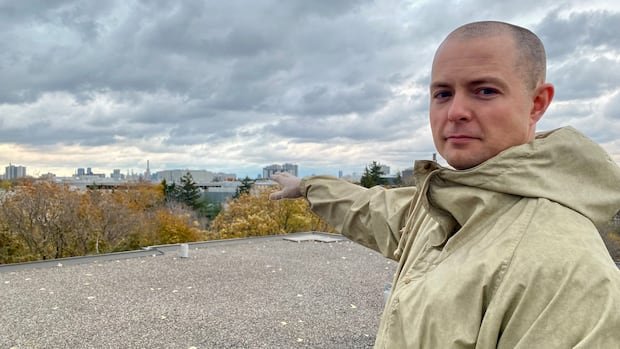
He says potential spying is a real threat for governments and organizations, such as those conducting sensitive research, but that there are already many ways to view the Sanofi property, including from the roof of the existing apartment building. He says additional storeys would not offer better observation points.
While “there may be a sweet spot to look into a building,” it likely falls within the province’s proposed 33-metre height limit, he said.
“Once you get above 10 storeys, given the proximity, the angle is so oblique that you can’t really see into a building.”
He notes there are also ways to mitigate risks, such as holding highly sensitive meetings in interior rooms and using blinds to cover the windows (something he says Sanofi already appears to be doing).
Chester points to several locations in Ottawa — including the Canadian Armed Forces and Public Safety Canada headquarters — which are each surrounded by tall buildings. There’s also a highrise under development neighbouring sensitive locations including the National Research Council Canada facilities and CSIS headquarters.
He says he wasn’t able to find any evidence that security concerns were raised in connection with that development.

In the letter to city council last year, Sanofi’s lawyer argued details of the company’s operations and security risks must remain confidential, and that the company “knows its own business better than external consultants.”
Bad precedent
The Ministry of Municipal Affairs and Housing is accepting input on the MZO proposal until Thursday. Among those who have weighed in already are housing advocacy groups like HousingNowTO and More Neighbours Toronto.
Colleen Bailey, with More Neighbours Toronto points to the benefits of more rental housing within walking distance of York University and major employers. She worries about the precedent an MZO could set.
“It’s unfortunate on two levels. Obviously, it’s not really in line with the priority of building homes. But then it also sends a message to anyone looking to build that this could happen to them,” Bailey said.
That’s precisely what another developer is worried about. First Capital REIT also has a highrise proposal at the corner of Dufferin and Steeles, right next door to the Tenblock site. The First Capital proposal would add more than 1,000 residential units. It has yet to go to city council for approval, but the company is now worried about the same fate.
“Naturally, we are concerned that a similar MZO will be imposed on the First Capital lands in the future once a council decision is made,” wrote Joshua Butcher, the company’s senior director of development, in his submissions to the housing minister.
Source: Read the original article at Ontario considering order that would kill hundreds of new rental homes on www.cbc.ca

