
Government Accused of Constructing Fake Homes for Deceptive Photo Opportunity
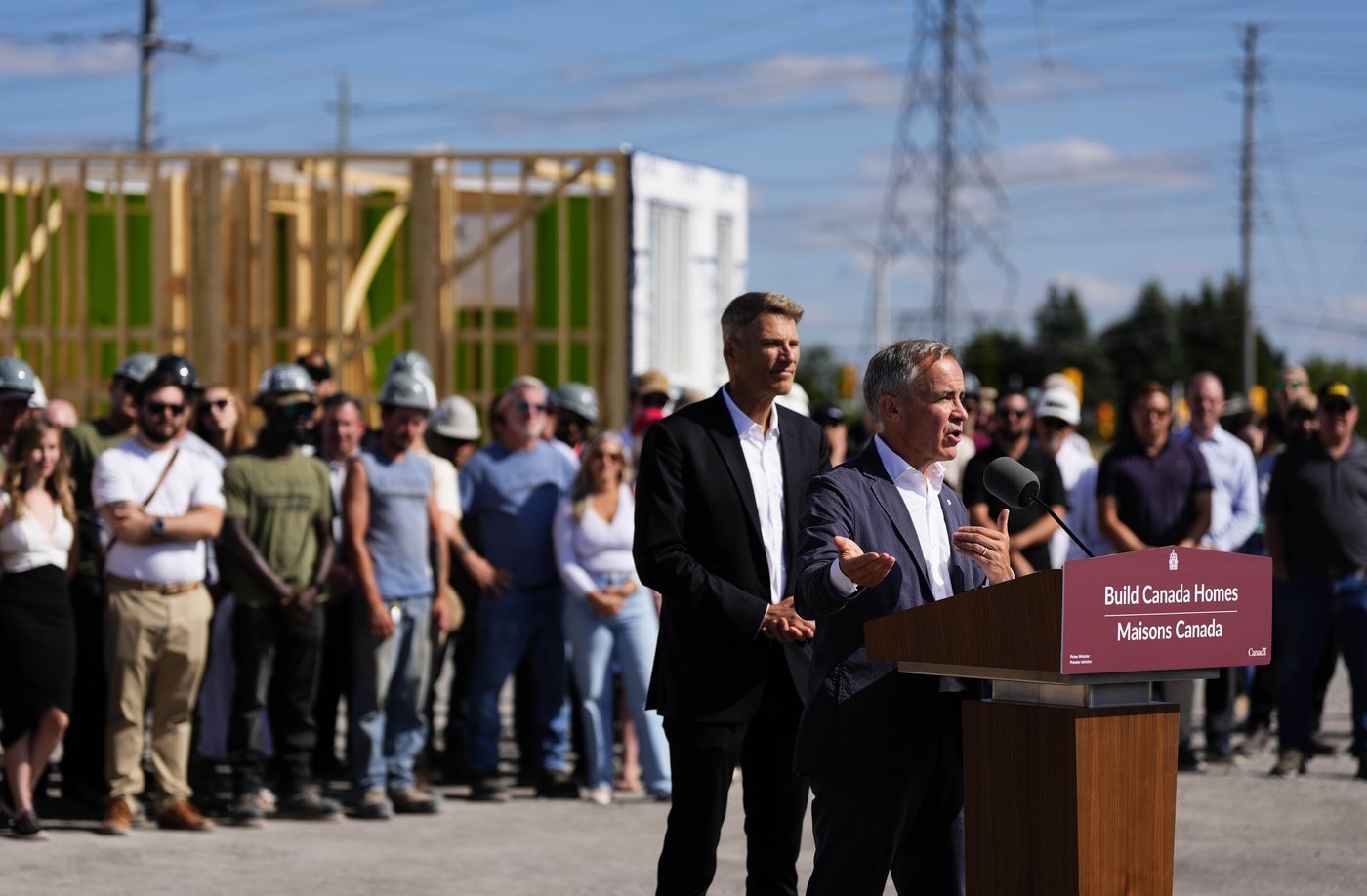
In September, the Canadian government’s announcement of its new Build Canada Homes agency aimed to enhance housing construction, particularly in response to the pressing housing crisis. The agency was launched with an ambitious $13 billion budget, intended to oversee the development of 4,000 homes on federally owned land. However, this announcement has sparked a wave of controversy on social media, with claims suggesting that the construction site showcased during the unveiling was fabricated, igniting public scrutiny.
During a press conference on September 14, Prime Minister Mark Carney presented the initiative alongside several modular homes under construction by Caivan Homes. The modular units, although visually incomplete at the event, were not intended as a permanent feature. Carney clarified that the construction was primarily intended to demonstrate the manufacturing capabilities of modular homes and stated that the assemblies would later be disassembled for relocation. This misinterpretation of the site’s purpose led to social media claims that a staged backdrop was engineered to mislead the public.
Critics have also called attention to the $13 billion budget, asserting that it implies a cost of over $3 million per home. However, further investigation reveals that this budget does not exclusively fund the 4,000 homes. The government’s plan includes diverse initiatives, such as a $1.5 billion rental protection fund and $1 billion allocated for supportive housing aimed at combating homelessness. These multifaceted financial commitments indicate a broader strategy to tackle housing challenges beyond mere construction.
The use of modular construction methods highlights significant industry trends favoring efficiency and adaptability. Modular homes are prefabricated in segments, allowing for streamlined assembly on-site and reducing the time traditionally required for construction. The success of such initiatives is particularly critical in addressing the urgent need for affordable housing solutions.
As the agency begins its work, the implications extend beyond mere numbers; they encompass the potential to reshape community housing dynamics, enhance affordable living options, and build a framework for future residential developments. Therefore, while the announcement may have generated skepticism, it embodies a crucial step towards innovative housing strategies that utilize modern construction technologies to meet escalating demands.
In conclusion, while public confidence may be challenged due to misinformation, the Build Canada Homes agency stands at the forefront of a necessary evolution in Canada’s approach to housing affordability and sustainability. As it progresses, stakeholders within the construction industry will be monitoring the practical outcomes of these initiatives closely.
📋 Article Summary
- A recent announcement about the Build Canada Homes agency was falsely claimed to showcase a fake construction site, as social media suggested the modular homes were not real.
- The builder clarified that the homes were actual prototypes intended for demonstration, not a permanent development, and were disassembled shortly after.
- The agency’s $13 billion budget is not solely allocated to the construction of 4,000 homes; it will also fund a rental protection program and supportive housing initiatives.
- Modular homes are produced off-site and assembled on location, with some already designated for other projects, indicating their intended temporary use during the announcement event.
🏗️ Impact for Construction Professionals
The announcement of the Build Canada Homes agency presents strategic opportunities for construction professionals, including company owners, project managers, and contractors. With a $13 billion budget aimed at constructing 4,000 homes, it’s crucial to align your business with government initiatives.
Practical Implications:
Consider positioning your company to bid on contracts related to modular home construction or supportive housing projects. Stay informed about the agency’s funding allocations for various construction programs, which could offer lucrative contracts.
Opportunities:
Investments in sustainable modular homes can set you apart in a competitive market. Engaging with local governments for partnerships can provide pathways to secure contracts related to rental protection and supportive housing.
Challenges:
Expect increased competition as the market heats up. Develop operational efficiencies to manage costs effectively while maintaining quality, narrowing your margins competitively.
Actionable Insights:
Attend industry conferences and workshops focused on this initiative. Build relationships with suppliers and other stakeholders to enhance project delivery. Incorporate flexible project management strategies to adapt to evolving government requirements.
Day-to-Day Impact:
Streamlining processes and staff training on modular home construction techniques will be critical. Fostering agility in your operations will ensure you’re ready to seize emerging opportunities driven by this new federal initiative.
#Claims #government #built #fake #homes #photo #misleading

