
Fact Check: Allegations of Government Creating Fake Homes for Photo Opportunity Misleading | NanaimoNewsNOW
Overview of Build Canada Homes Initiative: Key Developments and Implications
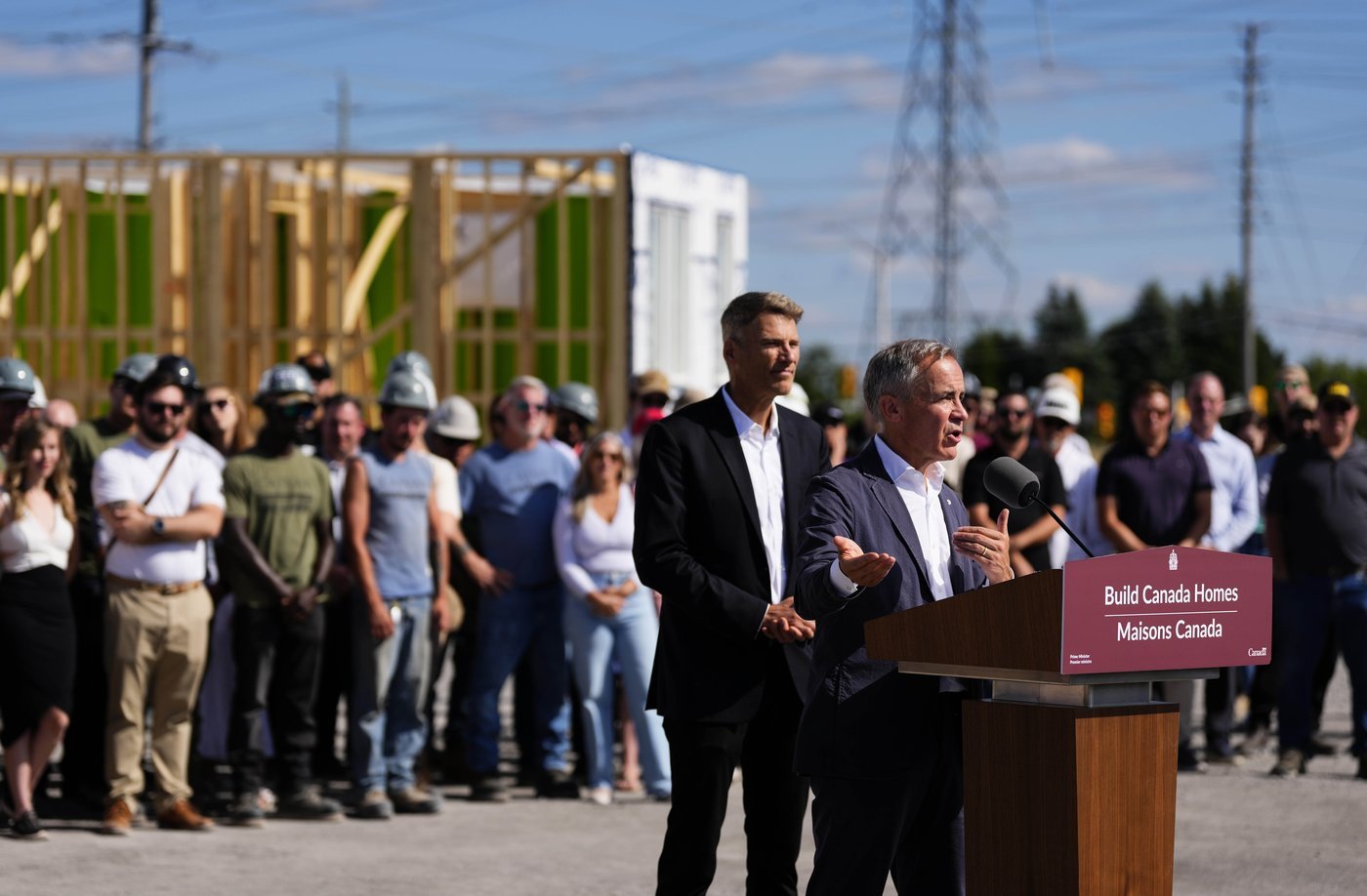
On September 14, Prime Minister Mark Carney announced a significant initiative aimed at addressing Canada’s housing crisis: the Build Canada Homes project. This ambitious plan, with a staggering initial budget of $13 billion, is set to construct 4,000 homes across six federally owned sites. The announcement, made in Nepean, has sparked discussions about housing affordability and the efficiency of modular construction techniques, but it has also provoked controversy regarding the project’s perceived authenticity.
Key to the announcement was the showcasing of three under-construction modular homes built by Caivan Homes. Critics on social media have alleged that these structures represented a “fake” construction site, arguing that the homes were never meant for permanent residency and were removed shortly after the press conference. In response, Carney clarified that the homes were prototypes designed to demonstrate modular construction potential, emphasizing that they were not intended as a finished housing development. Indeed, some of these homes are already designated for relocation, with one shipping to Nunavut and others being reassembled for use in east Ottawa.
Modular homes, which consist of prefabricated sections assembled on-site, present a streamlined method for increasing housing supply, a critical consideration in a country grappling with an ongoing housing shortage. Frank Cairo, CEO of Caivan Homes, reiterated the project’s intent: to exemplify the efficiencies and manufacturing capabilities of modular housing while facilitating faster delivery of units to market. This approach could play a vital role in expediting housing development both in urban centers and remote regions.
The project’s financial outline has also raised eyebrows. While $13 billion seems extensive, reports indicate that not all funds are allocated solely for the 4,000 homes. The budget also encompasses additional programs like a $1.5 billion rental protection fund and $1 billion aimed at developing supportive housing for homeless individuals. Such diversification could enhance the project’s social impact, providing a holistic approach to housing solutions, rather than merely focusing on construction numbers.
In conclusion, the Build Canada Homes initiative represents a strategic response to the pressing housing demands in Canada, embedding innovative modular construction techniques to expedite development. However, the controversies surrounding its execution and perceived transparency highlight the importance of clear communication between government bodies and the public. As this project unfolds, it will be crucial to evaluate its real-world impacts on housing affordability and access across diverse Canadian communities.
📋 Article Summary
- Build Canada Homes is set to construct 4,000 homes across six federally owned sites with an initial budget of $13 billion, announced by Prime Minister Mark Carney.
- Social media claims surfaced alleging that the government staged a fake construction site for the announcement due to incomplete modular homes being removed shortly after.
- The modular homes showcased during the announcement were prototypes intended to demonstrate construction techniques and were not meant as permanent housing.
- The $13 billion budget will also support various programs, including a $1.5 billion rental protection fund and $1 billion for supportive housing initiatives.
🏗️ Impact for Construction Professionals
The announcement of the Build Canada Homes initiative offers significant opportunities for construction professionals. With the federal government committing $13 billion to build 4,000 homes, there’s a clear demand for skilled contractors, project managers, and suppliers to engage in these projects.
Practical Business Implications: Companies should prepare to bid for contracts, capitalizing on potential partnerships with the government or major developers like Caivan Homes.
Opportunities and Challenges: While this initiative can boost demand for construction services, it also poses challenges regarding resource allocation amidst labor shortages and increasing costs for materials.
Actionable Insights: Companies should streamline operations, enhance workforce training, and establish relationships with suppliers to mitigate rising costs. Additionally, exploring modular construction methods could enhance efficiency and align with the government’s focus on innovative housing solutions.
Strategic Planning: Incorporate this initiative into your business model by developing a dedicated team to navigate public procurement processes and ensuring your company is adaptable to evolving market needs. This proactive approach can position your business favorably as the demand for housing rises.
#Fact #File #Claims #government #built #fake #homes #photo #misleading #NanaimoNewsNOW

